A federal judge in Washington state has temporarily blocked former US President Donald Trump’s attempt to restrict birthright citizenship, ruling the executive order unconstitutional. The decision, issued on Thursday by US District Judge John Coughenour, prevents enforcement of the controversial order for 14 days and sets the stage for further legal challenges.
“This is a blatantly unconstitutional order,” said Judge Coughenour, who was appointed by Republican President Ronald Reagan. “I’ve been on the bench for over four decades, and I can’t remember another case where the question presented is as clear as this one.”
Birthright citizenship, enshrined in the 14th Amendment of the US Constitution, grants citizenship to anyone born on US soil, regardless of their parents’ immigration status. Trump’s order sought to reinterpret this clause, arguing that individuals in the US illegally or on temporary visas were not “subject to the jurisdiction” of the country and therefore ineligible for citizenship.
Coughenour expressed disbelief at the administration’s defense of the order, calling it a “boggling” interpretation of constitutional law. “Frankly, I have difficulty understanding how a member of the bar could state unequivocally that this is a constitutional order,” he said during the hearing.
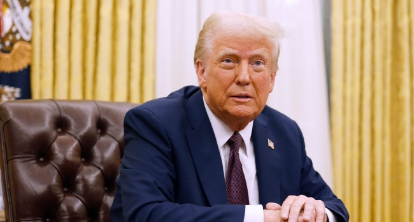
Trump, speaking from the Oval Office, confirmed his administration’s intention to appeal the ruling. “Obviously, we will appeal it,” he said, while the Department of Justice vowed to defend the order. A spokesperson said the executive order “correctly interprets” the Constitution and pledged to present a full legal argument.
The ruling comes in response to lawsuits filed by 22 states, two cities, and multiple civil rights groups. Arizona Attorney General Kris Mayes, whose state participated in the legal challenge, praised the decision. “No president can change the Constitution on a whim, and today’s decision affirms that,” Mayes said.
Washington Attorney General Nick Brown called Trump’s order “un-American,” emphasizing that birthright citizenship ensures citizenship cannot be conditioned on race, ethnicity, or parental origin. “It’s the law of our nation, recognized by generations of jurists, lawmakers, and presidents, until President Trump’s illegal action,” Brown said.
Legal experts and Trump’s opponents pointed to historical precedent, including the 1898 Supreme Court case United States v. Wong Kim Ark, which affirmed that children born in the US to immigrant parents are citizens. The case has been regarded as settled law for over a century.
Trump has repeatedly, and inaccurately, claimed that the US is the only country with birthright citizenship, ignoring that over 30 other nations, including Canada and Mexico, have similar policies.
The executive order, signed as one of Trump’s first acts during his second term, has drawn widespread condemnation and reignited debates over constitutional interpretation and immigration policy. A public inquiry into the broader implications of the ruling is expected to follow.
