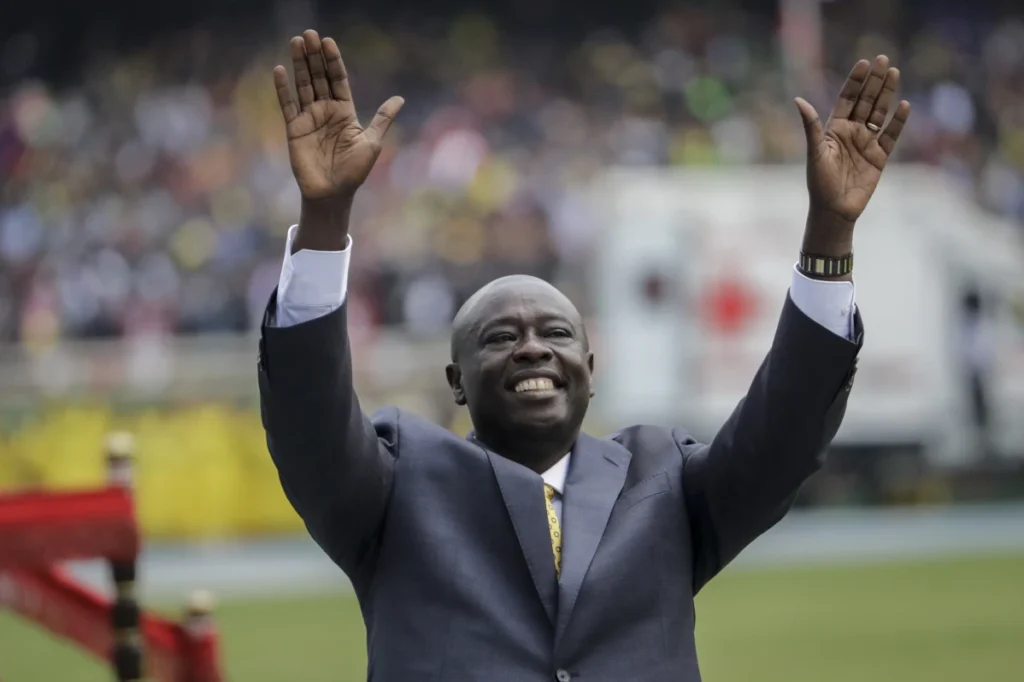
In a historic move, Kenya’s Senate voted on Thursday to remove Deputy President Rigathi Gachagua from office in an impeachment trial over corruption, ethnic division, and anti-government protest allegations. The vote came just hours after Gachagua was hospitalized with chest pains, further heightening tensions around the political drama.
The Senate approved five out of 11 charges against Gachagua, marking him as the first sitting deputy president in Kenya to be removed through impeachment proceedings. In the decisive vote on the first count, 54 senators voted in favor of his impeachment, surpassing the two-thirds majority required. This followed the National Assembly’s vote last week, where 282 lawmakers supported the move to impeach him, with 44 opposing.
Gachagua had pleaded not guilty to all charges on Wednesday and was expected to defend himself further in cross-examination before his sudden hospitalization delayed the trial. His lawyers requested a pause in proceedings to give him time to appear, but Assembly lawyers argued that the Senate was constitutionally bound to continue.
The impeachment centered on accusations of corruption, inciting ethnic divisions, and supporting anti-government protests. Notably, Gachagua was accused of insubordination for opposing the government’s forced eviction policy during recent heavy rains that caused severe flooding and deaths across the country.
Tensions between President William Ruto and his deputy have been growing, with some speculating that Gachagua’s impeachment may have had Ruto’s implicit approval. Gachagua had previously suggested that the motion had the president’s backing and called on lawmakers to vote “without intimidation.”
President Ruto, who has not publicly commented on the impeachment, has faced criticism over his government’s policies, particularly his attempts to raise taxes to pay off foreign debt. This has led to widespread public discontent and forced Ruto to reshuffle his cabinet and reconsider some of his tax proposals.
Meanwhile, Gachagua’s lawyer, Paul Muite, reported that doctors diagnosed the deputy president with “intense chest pains” and advised him to take “complete rest.” Dr. Dan Gikonyo, speaking outside Karen Hospital, said Gachagua would be monitored for up to three days, noting that the political stress could be affecting his health.
The trial’s conclusion, alongside Gachagua’s hospitalization, adds further uncertainty to Kenya’s political landscape, with potential repercussions for the country’s economy and investor confidence in East Africa’s commercial hub.
