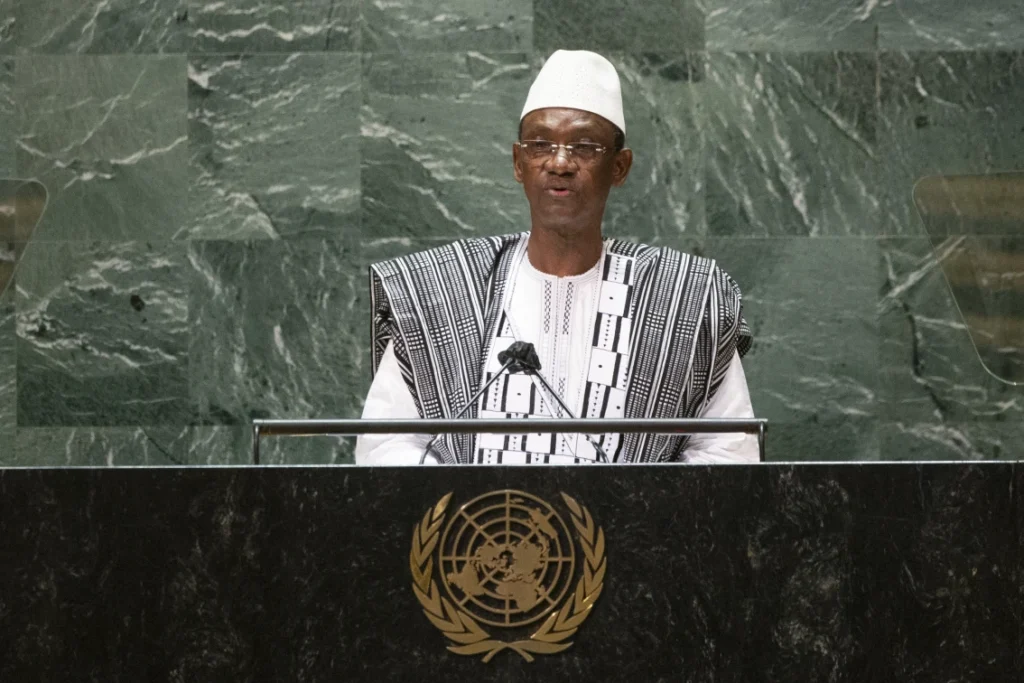
Mali’s junta leader, General Assimi Goita, dismissed Prime Minister Choguel Maïga and dissolved the government on Wednesday, following public criticism from Maïga over the military regime’s delayed transition to civilian rule. The decision was announced in a presidential decree read on state television channel ORTM.
Mali has been under military rule since a 2020 coup, followed by another coup in 2021. While the junta initially promised a return to civilian governance by March 2024, those elections have been postponed indefinitely, fueling growing uncertainty.
Prime Minister Maïga, who was appointed by the military two years ago, had openly criticized the regime at a rally on Saturday, accusing it of delaying elections without his knowledge. He warned that the lack of clarity on the transition could lead to “serious challenges and the risk of going backwards.”
In response to Maïga’s remarks, the junta organized counter-demonstrations against him, signaling deepening tensions within the regime. A new prime minister has yet to be announced.
The firing of Maïga follows a pattern of growing repression by Mali’s junta. Last week, authorities arrested one of the country’s top politicians for criticizing the military rulers of neighboring Burkina Faso. In June, the junta detained 11 opposition politicians and several activists.
The political instability comes amid an escalating security crisis in Mali and the broader Sahel region. Over the last decade, Mali, along with Niger and Burkina Faso, has faced rising extremist violence and repeated coups. All three nations are now ruled by military leaders who ousted civilian governments with promises of restoring stability.
Since taking power, Mali’s junta has severed ties with traditional Western allies, expelling French and American forces and forging closer security ties with Russia. However, analysts report that the security situation has deteriorated further, with record numbers of civilian casualties from attacks by Islamic militants and government forces alike.
Critics argue that the juntas in Mali and its neighbors have failed to deliver on their promises of improved security, instead presiding over worsening violence and growing political repression.
As Mali grapples with internal power struggles and intensifying insecurity, the path to civilian governance and stability remains uncertain.
