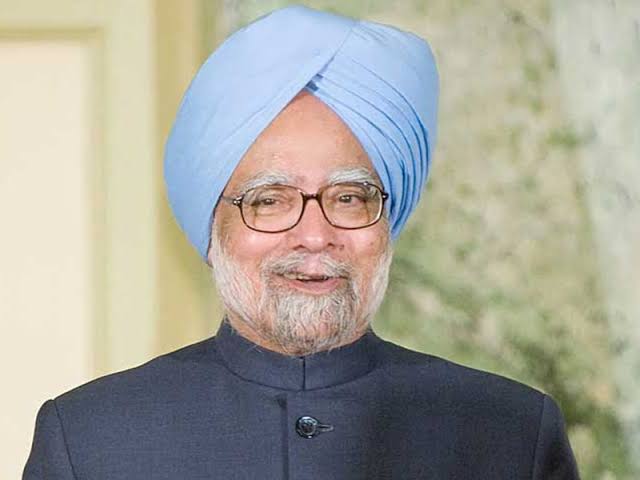
Manmohan Singh, Former Indian Prime Minister and Architect of Economic Reform, Dies at 92
Manmohan Singh, the former Indian prime minister whose transformative economic policies propelled India into the global spotlight, has passed away at the age of 92.
Singh, who served as India’s prime minister from 2004 to 2014, was widely credited with driving significant economic growth during his first term, though his second term faced challenges from slowing growth and allegations of corruption.
“India mourns the loss of one of its most distinguished leaders,” current Prime Minister Narendra Modi wrote on social media platform X on Thursday, following the announcement of Singh’s death. “As our Prime Minister, he made extensive efforts to improve people’s lives.”
Singh reportedly lost consciousness at his home in New Delhi on Thursday and was rushed to the All India Institute of Medical Sciences, where he was pronounced dead, according to a hospital statement.
Opposition leader Rahul Gandhi expressed his sorrow, calling Singh a “mentor and guide” who led India with “immense wisdom and integrity.” Gandhi added, “Millions of us who admired him will remember him with the utmost pride.”
Mallikarjun Kharge, leader of the opposition in the upper house of parliament, hailed Singh as “a visionary statesman, a leader of unimpeachable integrity, and an economist of unparalleled stature.”
President Droupadi Murmu also paid tribute, noting that Singh would “always be remembered for his service to the nation, his unblemished political life, and his utmost humility.”
A Legacy of Economic Reform
Born in 1932 in the village of Gah, now in Pakistan, Singh rose from humble beginnings to become one of India’s most respected leaders. With scholarships, he studied economics at Cambridge and Oxford, earning a PhD and setting the foundation for his career in public service.
Before entering politics, Singh held several senior civil service roles, served as governor of the Reserve Bank of India, and worked with international organizations, including the United Nations.
In 1991, as finance minister under then-Prime Minister P.V. Narasimha Rao, Singh introduced sweeping economic reforms that helped India recover from one of its worst financial crises. These reforms set the stage for India’s rapid economic growth and increased global influence.
During his tenure as prime minister, Singh oversaw a period of nine percent economic growth, bolstering India’s international standing. He also secured a landmark civil nuclear agreement with the United States to address the country’s energy needs.
US Secretary of State Antony Blinken described Singh as “one of the greatest champions of the US-India strategic partnership,” highlighting his role in advancing the historic nuclear cooperation deal.
Challenges and Controversies
Despite his achievements, Singh’s reputation was marred by corruption scandals during his second term, which overshadowed his earlier successes. His Congress party suffered a historic defeat in the 2014 elections, paving the way for Narendra Modi’s rise to power.
In his later years, Singh remained an outspoken critic of Modi’s economic policies and warned against the dangers of rising communal tensions in India, emphasizing their threat to the country’s democratic foundations.
Known for his humility and integrity, Singh, often referred to as “Mr. Clean,” leaves behind a complex legacy as both a visionary leader and a figure who faced challenges in his final years in office.