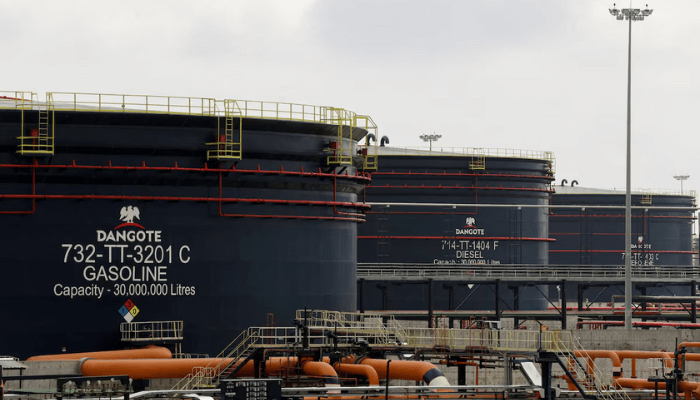
Petroleum marketers across Nigeria are ramping up negotiations with Dangote Petroleum Refinery ahead of its planned August 15 rollout of direct petrol distribution to the domestic market.
Industry insiders say the talks aim to secure stable, cost-effective fuel supply in the face of ongoing petrol scarcity, high logistics costs, and forex-driven import price volatility that have strained businesses nationwide. Both major and independent marketers have opened formal discussions with Dangote Refinery to gain access to competitively priced, locally refined products.
Abubakar Shettima, President of the Independent Petroleum Marketers Association of Nigeria (IPMAN), confirmed that many members are already registered with the refinery.
“Most of our members have registered with Dangote Refinery ahead of the August 15 takeoff,” Shettima said. “Prices might drop due to the absence of logistics costs or petrol costs. It’s a good development, and we are positive about the implications for Nigeria’s economy.”
With over 30,000 members and more than 150,000 service stations nationwide, IPMAN is positioning for what could be a major shift in Nigeria’s fuel supply chain.
Dangote Refinery’s current distribution partners include MRS, Heyden, Ardova (AP), Hyde, Optima, Techno Oil, TotalEnergies, Garima Petroleum, Sunbeth Energies, Sobaz Nigeria Ltd., Virgin Forest Energy, Sixxco Oil Ltd., N.U. Synergy Ltd., Soroman Nigeria Ltd., Jezco Oil Nigeria Ltd., Jengre, Cocean, Kifayat, Triumph Golden, Sifem Global, Riquest, and Mamu Oil.
A senior oil executive revealed the refinery will also leverage its relationship with Major Energies Marketers Association of Nigeria (MEMAN), which operates about 5,000 trucks, to distribute petrol, diesel, and aviation fuel nationwide. MEMAN members include 11 Plc (352 trucks), Ardova Plc (496 trucks), Conoil Plc (349 trucks), MRS Oil (305 trucks), NNPC (3,153 trucks), and TotalEnergies (647 trucks).
Manufacturers eye direct supply deals
The Manufacturers’ Association of Nigeria (MAN) is also exploring opportunities to secure direct supply agreements.
“Manufacturers are keenly watching the August 15 date. We have initiated steps to engage with the Dangote Refinery to explore the possibility of direct supply agreements,” a senior MAN official told BusinessDay.
For manufacturers, access to affordable and reliable fuel is critical in a deregulated market, especially as import price shocks continue to destabilise production budgets.
Africa’s largest refinery to cut out middlemen
With a capacity of 650,000 barrels per day, the Dangote Refinery will deploy a fleet of 4,000 CNG-powered trucks to deliver directly to petrol stations, industrial users, and other bulk consumers. This approach bypasses traditional depot owners, offers free delivery for bulk orders, and provides generous credit facilities to large buyers.
Energy analyst Muda Yusuf, CEO of the Centre for the Promotion of Private Enterprise (CPPE), says the plan will benefit consumers outside Lagos by reducing transportation premiums and minimising risks of supply disruptions from unionised truck drivers.
Winners and losers in the new model
- Winners:
- Large industrial users – Reduced fuel costs and improved supply reliability.
- Independent marketers & rural filling stations – Direct access to products without depot charges or middleman delays.
- Potentially consumers – Possible lower pump prices if savings are passed down.
- Losers:
- Depot owners – Risk of redundancy as Dangote bypasses traditional storage hubs.
- Import-dependent marketers – Less competitive against locally refined products free from forex volatility.
As August 15 approaches, stakeholders in Nigeria’s petroleum sector are bracing for what could be one of the most significant supply chain shakeups in decades—one that could reshape fuel pricing, availability, and distribution nationwide.
