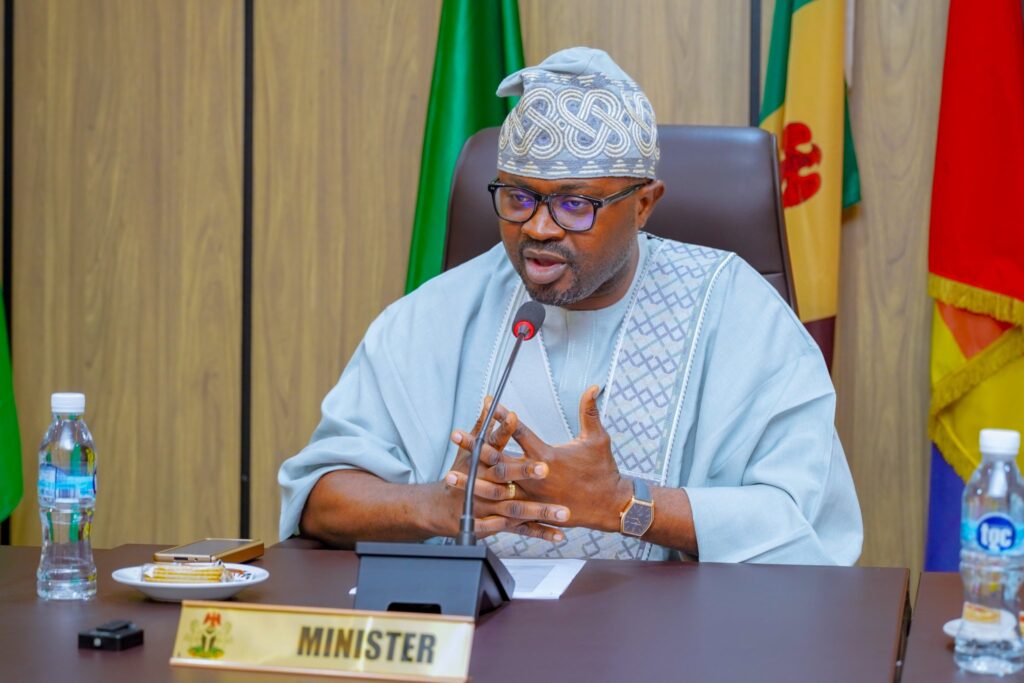
The Minister of Interior, Olubunmi Tunji-Ojo, has defended the recent hike in passport fees, explaining that the adjustment was necessitated by fluctuations in the exchange rate between the dollar and the naira. The minister clarified that the increase, which stands at approximately 45%, is essential to cover the cost of passport procurement.
The Nigerian Immigration Service had announced in August that the price of a 32-page passport booklet with a five-year validity had risen from ₦35,000 to ₦50,000. Similarly, the cost of a 64-page passport with a 10-year validity surged from ₦70,000 to ₦100,000. The price hike has sparked widespread criticism, with many Nigerians accusing the government of making migration, commonly referred to as “japa,” more expensive.
Speaking at a media briefing in Abuja on Friday to mark his first year in office, Tunji-Ojo addressed the concerns, stating that the government could not afford to subsidize passport fees. “If the government were to subsidize anything, I don’t think it should be passports,” he said. “The increase is just from ₦35,000 to ₦50,000 — only about 45%. There has been no increase for Nigerians abroad.”
Tunji-Ojo emphasized that the government is not profiting from the fee adjustment but is merely covering the costs associated with passport production. He reassured Nigerians in the diaspora, particularly those in the United States, Canada, and the United Kingdom, that new systems would soon make the passport application process more efficient.
“We are going to pre-launch automated systems very soon, and by October, they will be fully operational. For example, in London, there are 16,000 Nigerians applying for passports, while the embassy’s current capacity is only 200. With the new system in place, Nigerians will no longer have to make multiple trips to acquire their passports,” he added.
Tunji-Ojo also announced that the backlog of passport applications had been cleared and that the Nigeria Immigration Service had resolved all outstanding payments to passport service providers. “We now have about 80,000 passports in stock, including both the 32-page and 64-page booklets,” he revealed.
Despite the government’s explanation, many Nigerians remain concerned about the rising costs and the broader economic pressures they are facing. However, the minister remains steadfast that the fee increase was a necessary step in improving passport services.
