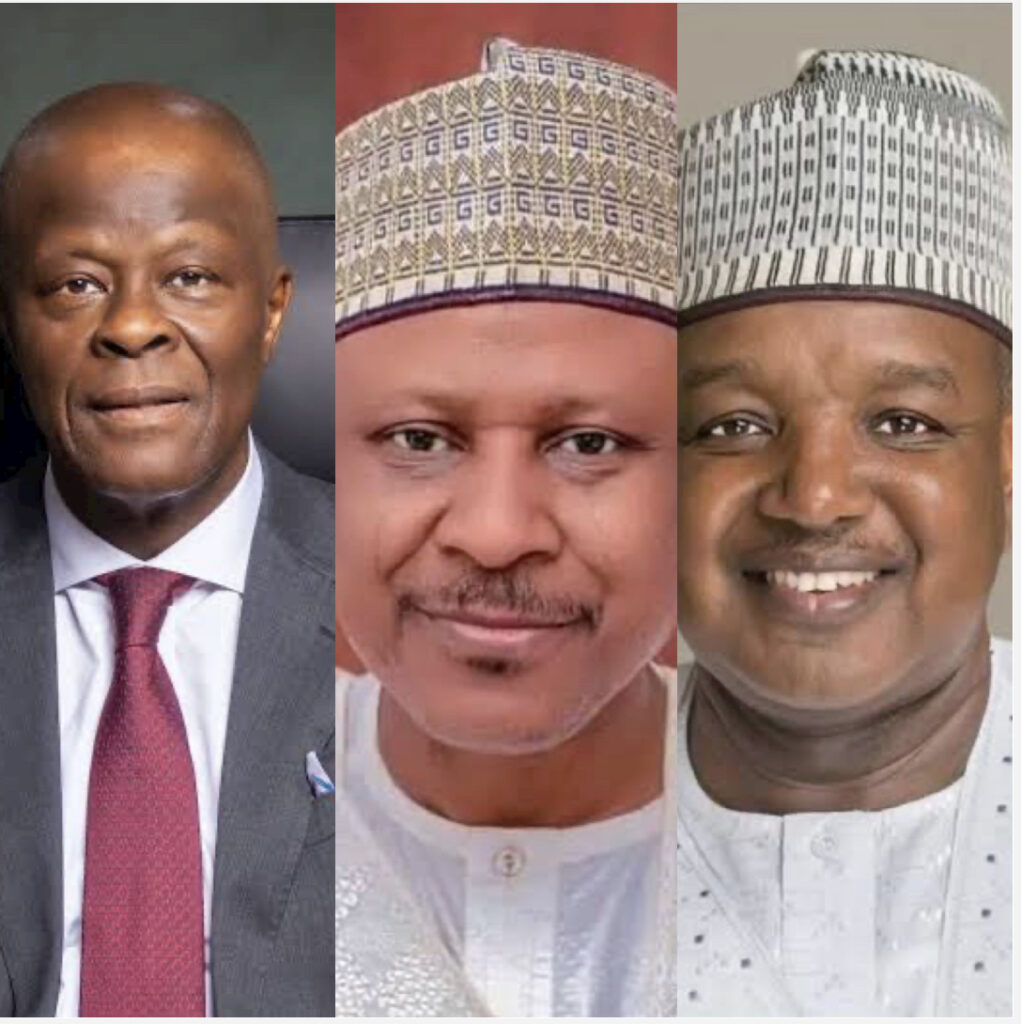
Yesterday, three ministers addressed key issues, including the benefits of ending petrol subsidy payments, the performance of the 2024 Budget implementation, and the significance of the national identity project. The ministers—Mr. Wale Edun (Finance and Coordinating Minister for the Economy), Atiku Bagudu (Budget and Economic Planning), and Mohammed Idris (Information and National Orientation)—spoke during a special budget defense session convened by the Senate Committees on Appropriation, Information, and National Orientation for various ministries, departments, and agencies (MDAs).
The Senate sought clarification from Edun and Bagudu on the economic impact of removing the petrol subsidy and the expenditure on debt servicing in 2024. Idris, represented by the Director-General of the National Orientation Agency (NOA), Mallam Lanre Issa-Onilu, and the Managing Director of the News Agency of Nigeria (NAN), Alli Mohammed Alli, emphasized the necessity of the national identity initiative spearheaded by the NOA.
Edun provided insights into the implementation of the previous year’s budget, particularly its capital component. However, Senator Abdul Ningi (PDP – Bauchi Central) pressed for detailed explanations regarding savings from the subsidy removal, their application in the 2024 fiscal year, and debt servicing figures. Edun requested an executive session to provide these details, a request granted by Senator Solomon Adeola (APC – Ogun West), chair of the committee.
Meanwhile, Issa-Onilu and Alli faced scrutiny over their budget allocations and the performance of their 2024 Budget. They were directed to revise and resubmit their 2025 fiscal year proposals. Senator Kenneth Eze (APC – Ebonyi Central), chair of the Senate Committee on Information and National Orientation, raised concerns about the grassroots awareness of the national identity project. Issa-Onilu defended the initiative, highlighting its role in promoting a unified national value system, but the committee demanded a more refined proposal for 2025.
In a separate session, the House of Representatives Committee on the Environment criticized the insufficient release of funds to the Ministry of Environment, which hindered efforts to address challenges like deforestation, pollution, erosion, and climate change impacts. Chairman Julius Pondi highlighted missed opportunities due to the lack of financial support and called for increased budget allocations to tackle environmental issues effectively.
Pondi also criticized the exclusion of the Environmental Health Council of Nigeria (EHCON) from budgetary provisions, urging its reinstatement. He emphasized the need for accountability and effective resource utilization to achieve set goals. Minister of Environment Balarabe Lawal outlined achievements, including solar-powered installations in several communities and institutions, while calling for additional funding to meet the ministry’s mandate.
Both sessions underscored the importance of transparency and efficient use of resources in addressing critical national issues and shaping the 2025 Budget.
