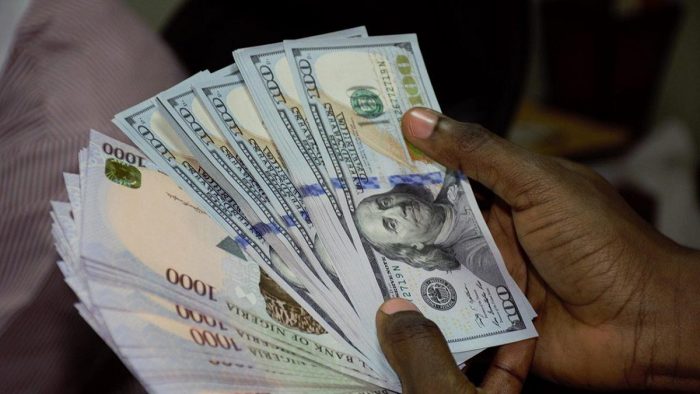
The Nigerian naira recorded a significant appreciation on Thursday, reaching its strongest level in seven months at N1,485.95 per dollar in the official market. This development follows a series of policy measures implemented by the Central Bank of Nigeria (CBN) aimed at stabilizing the foreign exchange market and restoring investor confidence.
According to data from the FMDQ Securities Exchange Limited, the naira strengthened by 1.67 percent, gaining N24.8 from N1,510.72 per dollar on Wednesday to N1,485.95 per dollar on Thursday. The currency had last reached a similar level on June 20, 2024, when it stood at N1,485.53 per dollar in the official market.
During Thursday’s trading session, currency dealers quoted the dollar between N1,470 and N1,516 at the Nigerian Foreign Exchange Market (NFEM). However, the parallel market, commonly known as the black market, saw a 0.6 percent decline, with the naira dropping from N1,625 per dollar on Wednesday to N1,635 per dollar on Thursday.
The recent appreciation of the naira is largely attributed to the CBN’s introduction of a new Foreign Exchange (FX) Code, which aims to enhance market liquidity, transparency, and discipline among market participants. The policy is part of ongoing efforts to sanitize the foreign exchange market and curb speculative activities that have contributed to volatility.
Muda Yusuf, CEO of the Centre for the Promotion of Private Enterprise (CPPE), emphasized the importance of these reforms, stating:
“I think the whole idea is just to ensure that there is a lot more sanity in the foreign exchange market because those characters have really created a whole lot of problems over the years. The more we’re able to sanitize the markets, the more stability it will achieve in the foreign exchange market.”
The FX Code is backed by the CBN Act of 2007 and the Banks and Other Financial Institutions Act (BOFIA) of 2020, giving the central bank the authority to regulate foreign exchange transactions and enforce compliance among financial institutions.
To ensure adherence, all market participants are required to conduct a self-assessment of their compliance with the FX Code and submit their reports to the CBN by January 31, 2025. Additionally, institutions engaged in forex trading must provide the CBN with a detailed implementation plan, which must be:
• Approved and signed by the board of directors
• Accompanied by relevant extracts from the board meeting where the plan was reviewed
The FX Code serves as a guiding framework for financial institutions but remains flexible to accommodate emerging financial products and market dynamics. While it does not explicitly cover all possible scenarios, institutions are expected to exercise sound judgment and best practices under the broader regulatory framework.
With the CBN’s continued interventions, the naira’s recent appreciation signals a positive shift in market confidence. However, sustained stability will depend on the effectiveness of ongoing reforms, external market conditions, and the country’s overall economic performance. Market watchers will closely monitor the impact of the FX Code and other monetary measures in the coming months.
