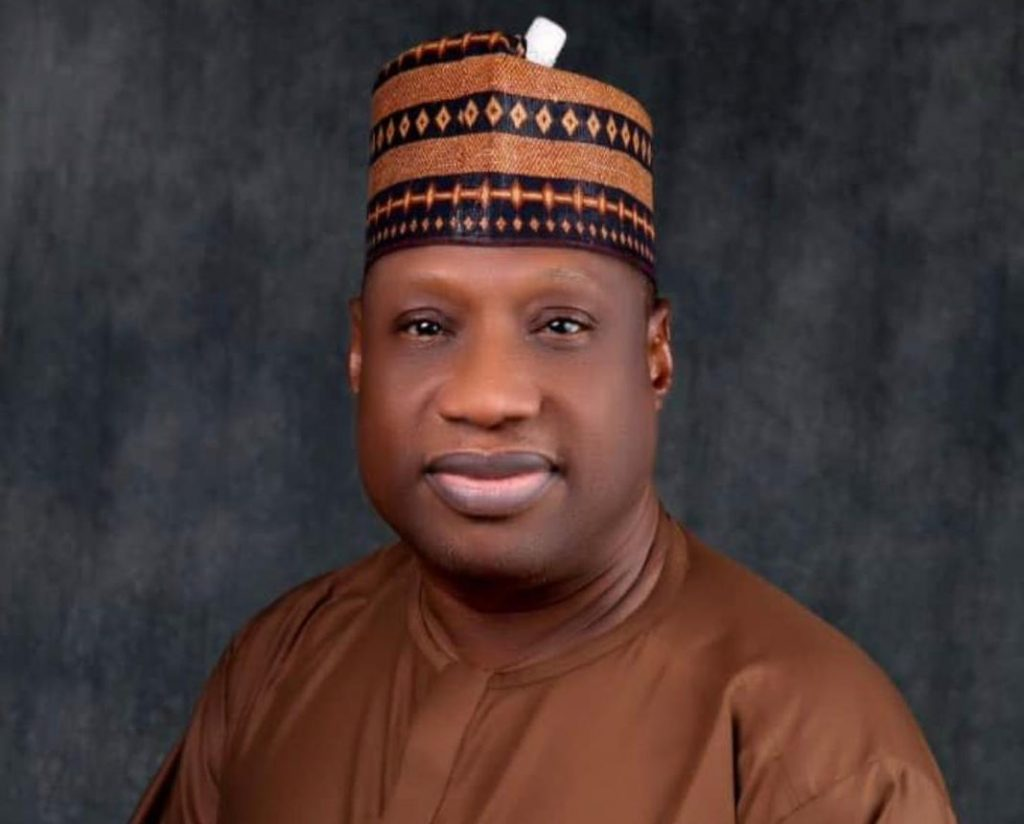
The Director-General of the Nigerian Airspace Management Agency (NAMA), Farouk Umar, has warned that the current N11,000 charge per flight imposed on airline operators is no longer sustainable, citing surging operational costs and the need to maintain critical aviation infrastructure.
Speaking in Abuja on Tuesday at a summit organised by the House of Representatives Committee on Aviation, Umar said the flat fee—unchanged since 2008—has become inadequate in today’s economic climate. The summit focused on the theme: “Emerging Trends in Global Aviation: Sustainability, Technology and Digital Transformation.”
Umar noted that the N11,000 is charged per flight, not per passenger, meaning airlines pay the same fee whether they carry 10 or 150 passengers on a Lagos–Abuja route.
“In 2008, NAMA was collecting N11,000 per flight. From then till now, airfares have risen significantly, with economy tickets now ranging between N150,000 and N200,000, yet we are still charging the same N11,000,” Umar said.
He stressed that NAMA is a cost-recovery agency and not a charity, adding that the agency must recoup investments in procuring and upgrading vital airspace infrastructure such as landing systems, radar surveillance, and communication facilities.
Over the years, NAMA has installed upgraded Instrument Landing Systems, modern radar surveillance technologies, and advanced communication systems aimed at aligning Nigeria’s aviation safety standards with global best practices. But Umar warned that the cost of installing and maintaining these systems has risen sharply due to inflation, currency depreciation, and global supply chain disruptions.
“We keep modernising to ensure Nigeria is not left behind in global aviation development. Yet, the airlines are still paying us peanuts. The world needs to know, and the airlines need to face reality. We cannot continue this way,” he insisted.
Airlines push back
According to Umar, NAMA has repeatedly engaged airlines on the need to review the charges but has faced stiff resistance. He argued that while airlines regularly adjust ticket prices to reflect economic realities, they refuse to acknowledge that the agency also operates within the same economic environment.
“The airlines have not been fair to the agency. They respond to economic circumstances by raising ticket prices, but they do not want to understand that we also operate in the same economy. We go to the same markets to procure equipment. Safety is at stake if we cannot recover costs,” he said.
Umar emphasised that the proposed review is not about profit-making but about ensuring safe, reliable, and modern air navigation services through cost recovery.
Earlier, the Chairman of the House Committee on Aviation, Abdullahi Garba, represented by his deputy Festus Akingbaso, described the summit as a critical step towards strengthening the aviation sector.
“Our goal is to develop actionable plans and reinforce priorities that enhance aviation safety, infrastructure, and regulatory compliance,” Garba said, adding that parliament would support NAMA and other aviation agencies in resolving funding challenges if they operate transparently and efficiently.
A sector caught in the middle
Nigeria’s aviation sector faces a growing dilemma: while airlines battle high operational costs, regulators like NAMA struggle with shrinking budgets to sustain airspace safety. Unlike in the United States, Canada, and Europe—where air navigation charges are pegged to aircraft size, distance flown, and other operational factors—Nigeria’s flat N11,000 rate has remained unchanged for 16 years.
Analysts warn that this disparity not only undermines NAMA’s financial sustainability but could also compromise safety if the agency cannot reinvest in its systems.
Airline operators, however, fear that any tariff increase would worsen their already fragile finances. They cite soaring fuel prices, forex scarcity, and multiple taxes across different government tiers as reasons they are operating on razor-thin margins.
Higher charges, they warn, could trigger even steeper ticket prices, further burdening Nigerian travelers who already pay some of the highest airfares in Africa. Industry stakeholders are therefore urging a delicate balance—one that allows NAMA to recover costs without pushing airlines or passengers beyond their limits.
