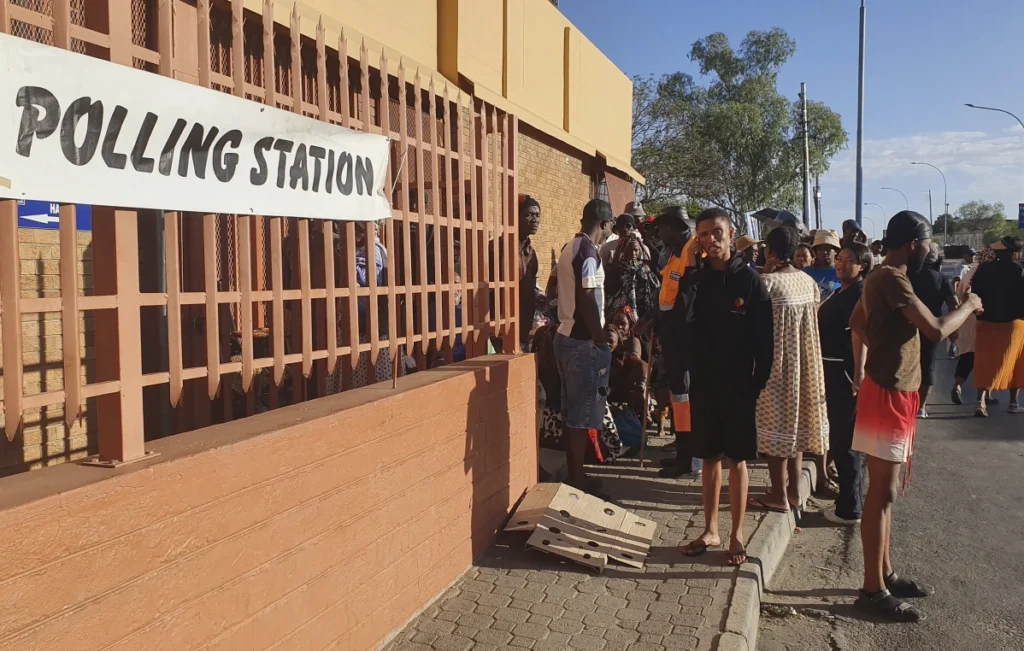
Voters in Namibia queued for hours outside polling stations in the capital Windhoek on Wednesday morning as the nation cast its ballots in a tightly contested election. The outcome could mark a pivotal shift for the ruling SWAPO party, which has governed since leading Namibia to independence from apartheid South Africa in 1990.
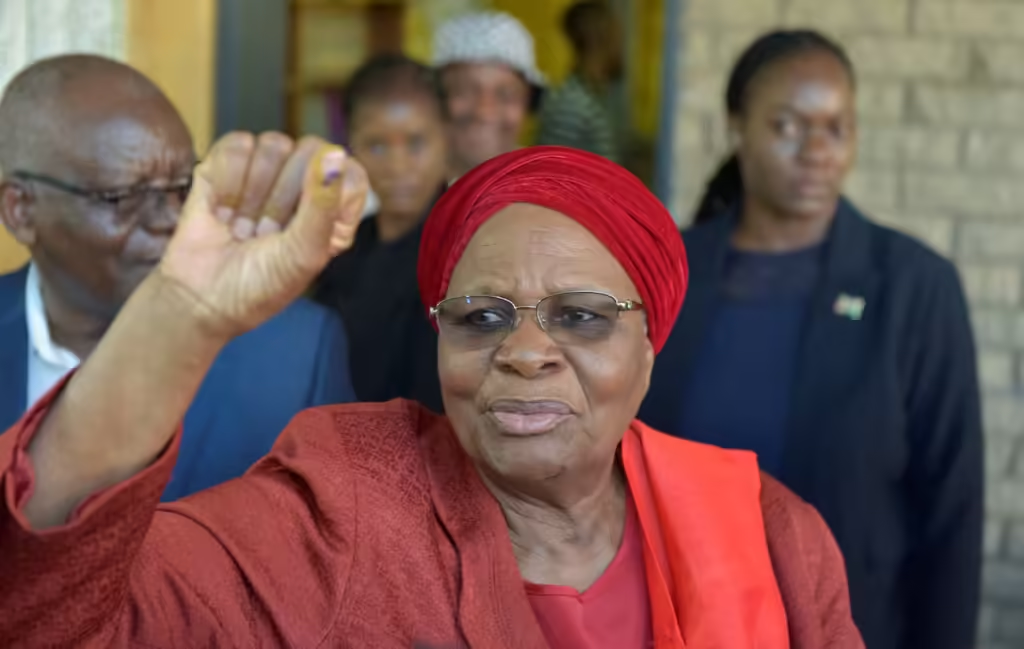
SWAPO’s candidate, Vice President Netumbo Nandi-Ndaitwah, stands to make history as Namibia’s first female president if she secures a majority. However, political analysts warn that discontent among the country’s youth, driven by unemployment, inequality, and allegations of corruption, could challenge the party’s dominance.
Polling stations opened at 7 a.m. local time (0500 GMT), but many voters began lining up overnight. Tuna Alweendo, a teacher in Windhoek, said, “I came here at 6:30 a.m., but the queue was long. This level of enthusiasm is new compared to 2019. The youth seem determined to bring change.”
SWAPO’s grip on power has weakened in recent years. In the 2019 presidential election, its support dropped to 56% from 87% in 2014. To avoid a run-off, a presidential candidate must secure more than 50% of the vote. Namibia’s elections also include separate voting for the National Assembly, with approximately 1.4 million registered voters in a country of 3 million.
Among the 14 opposition candidates, Panduleni Itula, a dentist-turned-politician, is considered the frontrunner. Itula, who finished second in 2019, has gained traction by appealing to voters disillusioned with the status quo.
Namibia’s interim president, Nangolo Mbumba, has been in office since February following the death of former president Hage Geingob. Mbumba is not running for election.
Speaking after casting her vote at a Windhoek primary school, Nandi-Ndaitwah acknowledged the country’s economic challenges. “The biggest challenge we have in this country now is unemployment,” she said, pledging that her government would prioritize job creation, especially for the youth. She attributed the current economic struggles to prolonged droughts and the COVID-19 pandemic, despite the nation’s recent growth fueled by investments in oil, gas, and green hydrogen.
Namibia remains one of the most unequal countries globally, ranking second in income inequality, according to World Bank data. While older and rural voters have historically shown loyalty to SWAPO, the party faces a test of whether it can retain their support amid mounting calls for reform.
Election results are expected in the coming days, setting the stage for a potential shift in the nation’s political landscape.
