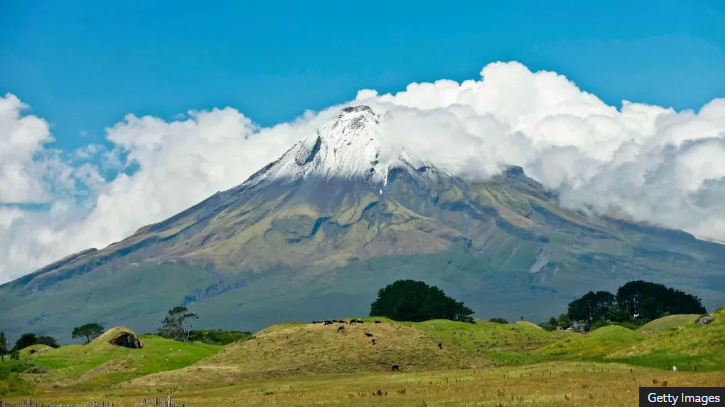
A groundbreaking settlement has officially granted Mount Taranaki (Taranaki Maunga) the same legal rights as a person after years of negotiations. This landmark decision, now enshrined in law, means that Taranaki Maunga will effectively own itself, with governance shared between local Māori tribes (iwi) and the New Zealand government.
Recognizing Māori Ancestral Ties and Historical Injustices
The agreement seeks to address injustices inflicted upon the Māori of the Taranaki region during colonization, including widespread land confiscation.
“We must acknowledge the hurt that has been caused by past wrongs, so we can look to the future to support iwi to realise their own aspirations and opportunities,” said Paul Goldsmith, the government minister responsible for the negotiations.
The Taranaki Maunga Collective Redress Bill, passed into law by New Zealand’s parliament, not only grants the mountain a legal name but also safeguards its surrounding peaks and land. This move aligns with the Māori worldview, which recognizes natural features like mountains as ancestors and living beings.
A Step Toward Justice and Cultural Restoration
“Today, Taranaki, our maunga [mountain], our maunga tupuna [ancestral mountain], is released from the shackles, the shackles of injustice, of ignorance, of hate,” said Debbie Ngarewa-Packer, co-leader of Te Pāti Māori (the Māori Party).
Ngarewa-Packer, one of the eight Taranaki iwi members who consider the mountain sacred, was joined by hundreds of other Māori at parliament to witness the historic moment.
As part of the settlement, the mountain will no longer be officially known as Egmont—a name given by British explorer James Cook in the 18th century—but will now be called Taranaki Maunga. The surrounding national park will also be restored to its original Māori name.
Government Apology and Treaty of Waitangi Redress
This settlement is the latest in an ongoing effort to provide compensation for breaches of the Treaty of Waitangi, which established New Zealand as a nation while granting indigenous Māori rights to their land and resources.
The agreement includes a formal government apology for the 1860s confiscation of Mount Taranaki and over a million acres of land from the local Māori population.
Paul Goldsmith acknowledged the significant harm caused, stating, “The breaches of the Treaty mean that immense and compounding harm have been inflicted upon the whānau [wider family], hapū [sub-tribe], and iwi of Taranaki, causing immeasurable harm over many decades.”
Despite the legal changes, Goldsmith reassured the public that access to the mountain remains unchanged, stating that “all New Zealanders will be able to continue to visit and enjoy this most magnificent place for generations to come.”
Part of a Growing Movement for Legal Personhood in New Zealand
Mount Taranaki is not the first natural feature in New Zealand to be granted legal personhood. The Urewera native forest became the first in 2014, followed by the Whanganui River in 2017. These landmark decisions reflect New Zealand’s commitment to incorporating indigenous perspectives into its legal and environmental frameworks.
The recognition of Taranaki Maunga as a legal entity marks a significant step toward cultural restoration, environmental protection, and reconciliation with Māori communities. By acknowledging past injustices and upholding the Māori worldview, New Zealand continues to set a global precedent in indigenous rights and environmental conservation.
