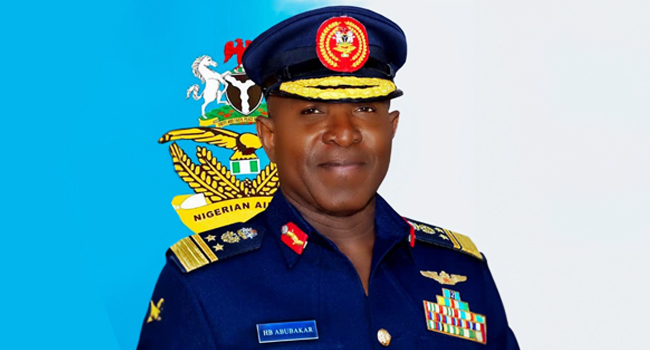
The Chief of Air Staff, Air Marshal Hassan Abubakar, has warned that the recent withdrawal of Burkina Faso, Niger, and Mali from the Economic Community of West African States (ECOWAS) has intensified Nigeria’s security challenges, particularly in the fight against terrorism and insurgency.
Speaking at the first-quarter meeting with branch chiefs, air officers commanding, and commanders in Abuja on Wednesday, Abubakar noted that the withdrawal had disrupted key regional security frameworks, including the Multinational Joint Task Force (MNJTF)—a coalition crucial in countering Boko Haram and ISWAP.
“The recent withdrawal of the Alliance of Sahel States from ECOWAS has disrupted existing security frameworks. This development has direct implications for the MNJTF, which has played a crucial role in countering Boko Haram and ISWAP across Nigeria, Niger, Chad, and Cameroon,” he said.
Increased Security Burden on Nigeria
With Chad also considering withdrawal, Abubakar warned that the MNJTF’s operational capacity could be further weakened, increasing pressure on Nigeria’s armed forces.
“With these states opting out and Chad considering withdrawal, the MNJTF’s capacity to conduct joint operations is now significantly affected. As a result, the burden on the Armed Forces of Nigeria to support the MNJTF will increase, demanding a more robust, agile, and adaptive response from the Nigerian Air Force.”
To counter these security threats, Abubakar emphasized the need to strengthen operational readiness, inter-agency coordination, and advanced air power in combating insurgency across the Sahel and Lake Chad Basin.
Growing Extremist Threats in the Sahel
The Air Chief also raised concerns over the expansion of extremist groups, noting that Al-Qaeda-affiliated terrorists were exploiting weak governance structures in the region. He highlighted porous borders as a key enabler of their activities.
“West Africa’s security landscape in 2024 remained highly complex. The Sahel region continued to be a hotspot for terrorism and insurgency, with extremist groups taking advantage of weak governance. In the Lake Chad Basin, porous borders have allowed these elements to persist, threatening regional stability.”
He further stressed the need for increased aerial surveillance to tackle maritime crimes in the Gulf of Guinea, including piracy and illegal oil bunkering.
Counter-Insurgency Gains and Emerging Threats
Abubakar commended security forces for their achievements in counterinsurgency operations in the North-East and North-West, citing improved collaboration between the Air Force and ground troops in 2024. However, he cautioned about new security threats, including the emergence of the Lakurawa group in the North-West and renewed Boko Haram drone attacks in the North-East.
“A significant incident in 2024 was the use of drones carrying locally fabricated grenades in a kamikaze role by Boko Haram terrorists to attack our troops in Wajiroko, Damboa LGA. This highlights the growing efforts by terrorists to adopt drone attack technology.”
To address this, he called for the implementation of a comprehensive counter-Unmanned Aerial Vehicle (UAV) defense system to protect military personnel and assets.
Regional Security and the Accra Initiative
Meanwhile, the Coordinator of the National Counter-Terrorism Centre, Maj. Gen. Adamu Laka, expressed concerns over the growing confidence of terrorist groups, warning that their recent successes had emboldened them to expand into coastal West African states, including Benin Republic.
“The successes recorded by these terrorists have further emboldened their operational capabilities with their attempted expansion towards coastal West African countries such as Benin Republic.”
He emphasized the urgent need for stronger regional security collaboration to curb the spread of terrorism.
West Africa’s Escalating Terrorism Crisis
Echoing similar concerns, Maj. Gen. Richard Gyane, Commandant of the Kofi Annan International Peacekeeping Training Centre, highlighted the alarming rise of terrorist activities in the Sahel. He revealed that between 2007 and 2023, West Africa’s share of global terrorism-related deaths surged from 1% to 43%.
“Such activities are gradually spreading to littoral countries such as Côte d’Ivoire, Benin, and Togo, raising concerns about their potential expansion towards Ghana.”
He pointed out that organized crime, including arms trafficking, human smuggling, and illicit trade in natural resources, is fueling the spread of terrorism in the region.
Successes in the South-East and South-South
Abubakar also highlighted security improvements in the South-East, where secessionist attacks had declined following military operations and the arrest of Simon Ekpa in Finland.
Similarly, he noted successes in the South-South, where sustained aerial surveillance under Operation Delta Safe had significantly reduced crude oil theft and illegal bunkering.
“As a result of our joint efforts, Nigeria’s production of crude oil and condensates rose in the last quarter of 2024 by over 13 percent above the 1.5 million barrels per day output for the same period in 2023.”
Call for Stronger Regional Cooperation
Laka reiterated that no single nation could combat terrorism alone, urging ECOWAS member states to strengthen intelligence-sharing and joint military operations.
“No nation can solely combat this menace, as it transcends national borders. This is evident in the tri-border region of Mali, Burkina Faso, and Niger.”
With terrorist networks expanding southward, experts are calling for greater regional collaboration, advanced counterterrorism strategies, and investment in military technology to secure West Africa’s future.
