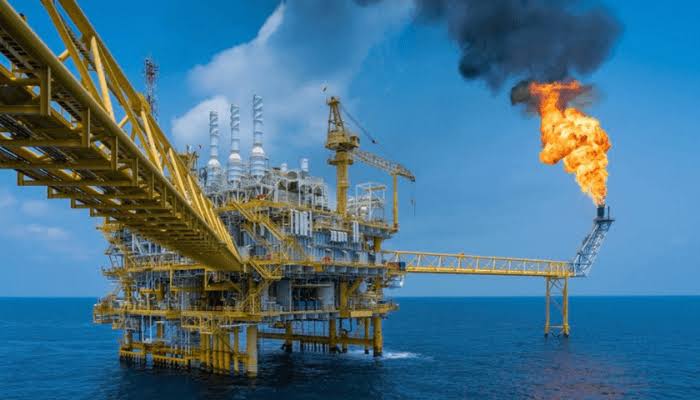
The Nigerian federal government has set an ambitious target of achieving approximately 4 million barrels per day in oil production and 10 billion cubic feet of gas output by 2030. This announcement follows the recent offshore oil and gas incentives introduced by President Bola Tinubu, aimed at revitalizing the sector.
In a statement released on Thursday, Mrs. Olu Verheijen, Special Adviser to the President on Energy, detailed the government’s commitment to revitalizing the oil and gas industry, which is crucial for Nigeria’s economy. She noted that since the approval of Nigeria’s last deepwater project, the Egina project, in 2013, International Oil Companies (IOCs) have diverted over $82 billion in deepwater investments to countries perceived as more competitive.
Verheijen stated, “Over the next few years, IOCs plan to spend an additional $90 billion on developing deepwater oil and gas projects. Our reforms are strategically targeting this pool of funds, and we intend to unlock between $5 billion and $10 billion of new investments in Nigeria in the near to medium term.”
Historically, Nigeria has struggled to meet its Organisation of Petroleum Exporting Countries (OPEC) oil production quota, largely due to rampant oil theft and underinvestment in the sector. However, Verheijen highlighted the government’s reforms initiated since May 2023, designed to enhance the competitiveness of Nigeria’s oil and gas industry by reducing operational costs and timelines.
The reforms include three presidential directives issued in February 2024, which are projected to create tens of thousands of jobs, enhance foreign exchange earnings, stimulate tax revenues, and contribute to the overall macroeconomic stability of the nation.
Verheijen also emphasized the recent approval of two sets of fiscal incentives by President Tinubu, which include a Value Added Tax (VAT) waiver for gas, diesel, electric vehicles, and clean cooking equipment, along with tax credits for new investments in deepwater oil and gas exploration and production. These incentives are aligned with the Presidential Gas for Growth Initiative, aiming to expedite natural gas development and improve energy security in Nigeria.
Despite the global energy transition urgency, approximately 76% of Nigeria’s gas remains untapped, stressing the need for immediate action. The Chairman of the Oil Producers Trade Section (OPTS), Osagie Okunbor, commended the government’s coordinated efforts, stating, “The level of coordination and policy coherence we’re seeing today is unprecedented.”
Rosario Osobase, Chairperson of the Petroleum Contractors Trade Section (PCTS), echoed similar sentiments, noting, “For the first time in a long while, we’re seeing positive momentum in our industry in Nigeria.”
However, challenges persist. A recent survey by Reuters indicated a decline in Nigeria’s oil output, with the country producing 40,000 barrels per day less than anticipated, contributing to decreased exports. The survey highlighted that OPEC output fell in September to its lowest level this year, with significant declines in Libya and Iraq.
As Nigeria strives to ramp up production to enhance foreign exchange inflow, this recent output shortfall poses a critical setback. The Nigerian Upstream Petroleum Regulatory Company Limited (NUPRC) is expected to confirm these production deficits in the coming days.
Overall, while the government’s new incentives and reforms are positioned to attract much-needed investment into the oil and gas sector, the challenge of consistent production and global market dynamics remains a key focus for Nigeria’s economic future.
