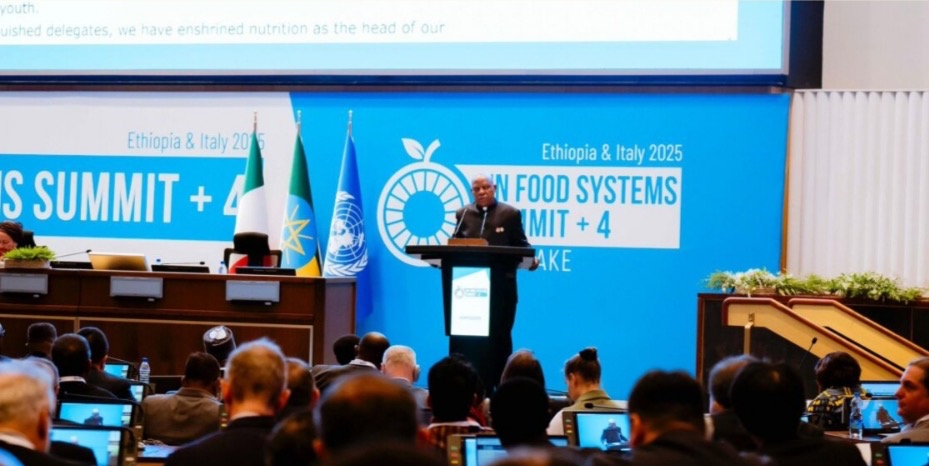
Nigeria has announced the deployment of artificial intelligence (AI), satellite-driven climate intelligence, and geospatial analytics to monitor food production and combat hunger across the country. Vice President Kashim Shettima disclosed this during the United Nations Food Systems Summit Stocktake (UNFSS+4) in Addis Ababa, Ethiopia.
According to Shettima, the initiative will enhance transparency across the agricultural value chain, connect farmers to markets, and drastically reduce post-harvest losses. He noted that these advanced technologies have become central to Nigeria’s strategy to strengthen food security and build a climate-resilient agricultural system.
“A broken food system in any part of the world diminishes the dignity of humanity as a whole,” Shettima said, calling for a united African response to hunger and climate-induced food insecurity.
Agro-Industrial Zones and Institutional Reforms
Nigeria is working with the African Development Bank (AfDB) and the International Fund for Agricultural Development (IFAD) to establish Special Agro-Industrial Processing Zones. These hubs will drive job creation, attract private investment, and integrate rural farmers into local and international markets.
Additionally, the Federal Executive Council has approved the National Multi-Sectoral Plan of Action for Food and Nutrition, which mandates the creation of nutrition departments across ministries. The plan will also strengthen governance structures for food systems and nutrition delivery nationwide.
Community-Based Nutrition Programmes
Through the Nutrition 774 Initiative, all 774 local government areas in Nigeria will be mobilised to implement nutrition-sensitive agriculture, school feeding programmes, and grassroots nutrition education. The government is prioritising women and youth as key drivers of food system transformation.
Climate-Smart Food Security
Shettima reaffirmed Nigeria’s commitment to expanding the cultivation of staple crops such as maize, rice, cassava, and wheat using climate-smart innovations. He stressed that food systems must be both sustainable and nutritionally responsive, ensuring communities have access not only to food but to healthy diets.
A Call for Continental Collaboration
The Vice President urged African leaders to adopt collective strategies to tackle global food insecurity.
“We must listen, learn, and lead together. Only through shared purpose and multilateral action can we deliver a future free from hunger,” he added.
The adoption of AI and climate intelligence, along with agro-industrial reforms, positions Nigeria as one of Africa’s leaders in applying cutting edge technology to agriculture.
