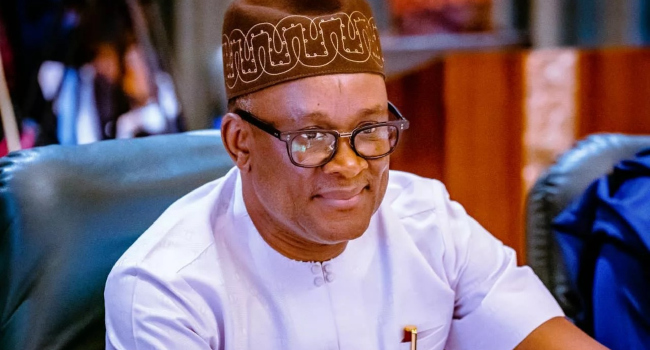
The Nigerian government’s “Nigeria First” policy is projected to inject ₦3 trillion into the national economy annually, the Minister of State for Industry, Trade, and Investment, John Enoh, announced on Monday. This new economic initiative is expected to contribute significantly to the growth of the manufacturing sector and create a robust environment for job creation.
In a briefing with State House Correspondents following the Federal Executive Council meeting at the State House in Abuja, Enoh revealed that the policy would play a pivotal role in boosting Nigeria’s manufacturing sector by 20% over the next three years. This move comes as part of President Bola Tinubu’s broader efforts to implement policies that prioritize Nigerian-made goods and services.
Executive Order and Economic Impact
On May 5, 2025, President Tinubu outlined plans to issue an Executive Order aimed at ensuring Nigerians prioritize homegrown goods and services. This directive aligns with the government’s commitment to supporting local industries and reducing reliance on foreign imports.
Enoh emphasized that the “Nigeria First” policy would not only stimulate the manufacturing industry but also create over 500,000 jobs in the short term. Moreover, the initiative is expected to result in a 30% reduction in imports, thereby bolstering local production and self-sufficiency.
Private Sector Collaboration Key to Growth
Alongside the policy announcement, the Minister of Information and National Orientation, Mohammed Idris, highlighted ongoing efforts to improve procurement systems and encourage private sector participation in Nigeria’s economic development. Idris stated that the Federal Executive Council has tasked the Bureau for Public Procurement with communicating the new thresholds for government procurement. Additionally, FEC underscored the need for stronger collaboration between Ministries, Departments, and Agencies (MDAs) and private sector players, particularly in infrastructure development.
This collaboration aims to harness the private sector’s potential to drive Nigeria’s growth across various sectors, fostering a more sustainable and diverse economy.
The Road Ahead for Nigeria’s Economic Landscape
As the government sets its sights on reducing imports and boosting local industries, the “Nigeria First” policy is poised to make a lasting impact. With substantial investments in manufacturing and a focus on infrastructure, the initiative is expected to significantly enhance Nigeria’s economic resilience.