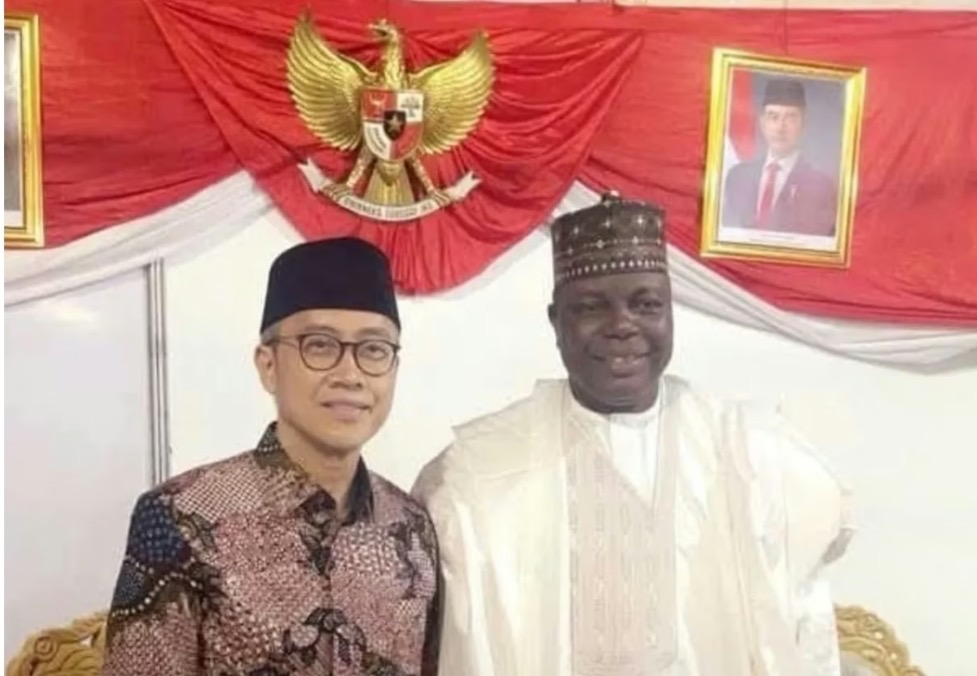
Nigeria and Indonesia have deepened bilateral ties with a series of high-impact initiatives aimed at transforming Nigeria’s agricultural landscape and strengthening its vaccine infrastructure.
The growing partnership spans several sectors, with a focus on livestock development, fertilizer production, palm oil cultivation, and public health, signaling a new chapter in economic and scientific collaboration between Africa’s largest economy and Southeast Asia’s most populous nation.
Livestock Development: A New Era of Reproductive Technologies
Two Nigerian states Kebbi and Sokoto have become early beneficiaries of Indonesia’s advanced livestock technologies. In Kebbi, the state government recently concluded a training program in Indonesia for two veterinary officers specializing in artificial insemination (AI) and embryo transfer. This initiative is expected to boost cattle productivity, improve breeds, and raise dairy output.
Meanwhile, Sokoto State received a donation of 1,000 units of frozen cattle semen from the Indonesian government to support similar AI programs. These initiatives aim to enhance livestock yields, with an ambitious national target to increase milk production by 60% and meat output by 40% over the next five years.
Agricultural Innovation: Fertilizer and Palm Oil Projects
In a major step toward agricultural sustainability, the Federal Government of Nigeria and Indonesian company PT Saputra Global Harvest signed a Memorandum of Understanding (MoU) to establish a coal-to-fertilizer plant in Nigeria. The project is expected to address fertilizer shortages and drive up crop yields nationwide.
Additionally, the National Palm Produce Association of Nigeria (NPPAN) and the Indonesian Palm Oil Association (GAPKI) have inked a strategic MoU to collaborate on best practices in palm oil cultivation. The agreement seeks to improve palm oil yields, support smallholder farmers, and expand export markets.
Public Health Boost: Vaccine Donation and Biotech Synergy
On the public health front, Indonesia’s development agency donated 1.58 million doses of the pentavalent vaccine to Nigeria in 2023. The vaccine which protects against diphtheria, tetanus, pertussis, hepatitis B, and Haemophilus influenzae type B was distributed through health centers across Nigeria as part of a joint effort to bolster childhood immunization.
Discussions are also ongoing between Nigeria’s National Veterinary Research Institute (NVRI) and Indonesia’s Bio Farma for future partnerships in vaccine research and biotechnology.
Strengthening South-South Cooperation
Officials from both countries have hailed the partnership as a model for South-South cooperation a framework for collaboration among developing nations. Indonesian Ambassador to Nigeria, Dr. Usra Hendra Harahap, emphasized that these initiatives go beyond aid and are rooted in mutual investment, innovation, and sustainable growth.
“The goal is to create long-term value for farmers, scientists, and communities in both our countries,” said Harahap.
Looking Ahead
As implementation begins on several fronts, analysts believe the Nigeria-Indonesia partnership could become a blueprint for other emerging economies seeking to combine technological innovation with inclusive development.
With promising early results in agriculture and health, the partnership is poised to drive real transformation from cattle farms in Kebbi to vaccine labs in Abuja.
