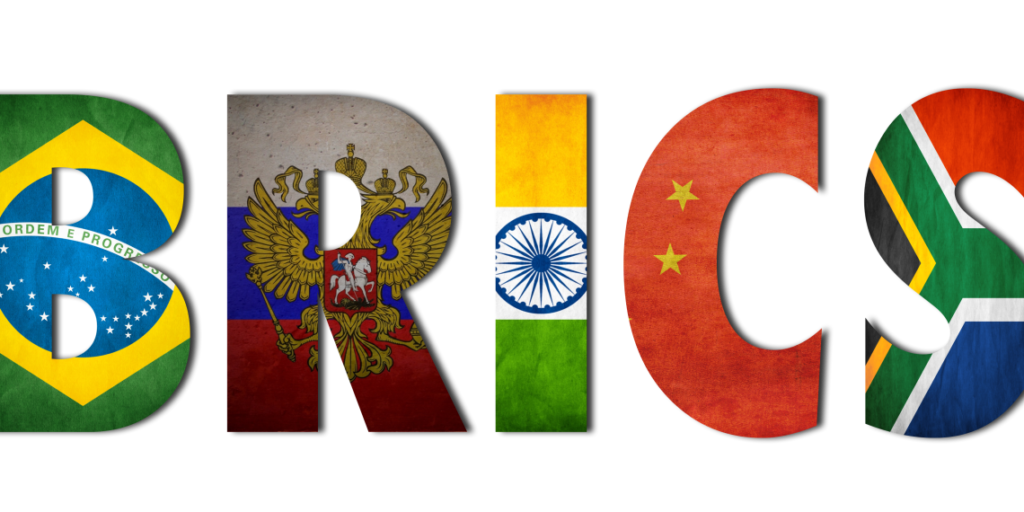
Nigeria has formally accepted the invitation to join the BRICS bloc of developing economies as a partner country.
The Ministry of Foreign Affairs disclosed this in a statement on Saturday.
The country was admitted as a BRICS partner country during a BRICS summit in Russia in 2024. This marked the country’s inclusion in a partnership with 12 other nations aimed at strengthening ties with the emerging economic bloc.
According to the Ministry of Foreign Affairs, the formal acceptance to participate as a partner country highlights Nigeria’s commitment to fostering international collaboration and leveraging economic opportunities.
The ministry also said Nigeria is focused on advancing strategic partnerships that align with its development objectives.
The ministry noted that BRICS, as a collective of major emerging economies, presents a unique platform for Nigeria to enhance trade, investment, and socio-economic cooperation with member countries.
“Nigeria is poised to leverage this platform to advance shared goals in trade and investment, energy security, infrastructure development, technology, and climate change.
“This partnership also aligns with our national aspirations for inclusive growth, regional integration, and active participation in shaping a fair and equitable global economic order in line with our ethos of strategic autonomy,” the statement read.
Nigeria’s status as a “partner country” differs from the full membership granted to Indonesia on 7 January.
Although Nigeria’s recent designation as a “partner country” of the BRICS bloc signifies a collaborative relationship with the group, it is distinct from full membership.
As a partner, Nigeria can engage with BRICS initiatives without the formal obligations or decision-making rights that come with full membership. Full members, on the other hand, actively shape the bloc’s policies, benefit from broader access to resources, and have a more significant role in governance.
Nigeria has, however, expressed interest in engaging “constructively with BRICS members.”
According to the Ministry of Foreign Affairs, Nigeria aims “to drive innovation, foster people-to-people exchanges in line with our national interests and strategic priorities.”
The most populous African nation becomes the ninth BRICS partner country, joining Belarus, Bolivia, Cuba, Kazakhstan, Malaysia, Thailand, Uganda, and Uzbekistan.
The BRICS bloc
BRICS was established in 2009 by Brazil, Russia, India, and China, with South Africa joining a year later in 2010.
The bloc was created to counterbalance the Group of Seven (G7), which consists of advanced economies. BRICS aims to amplify the influence of developing nations.
The term “BRICS” originated in the early 2000s as a label for emerging economies projected to become major global economic powers by the mid-21st century. The bloc has since evolved into a platform for addressing global economic disparities and fostering cooperation among rising economies.
