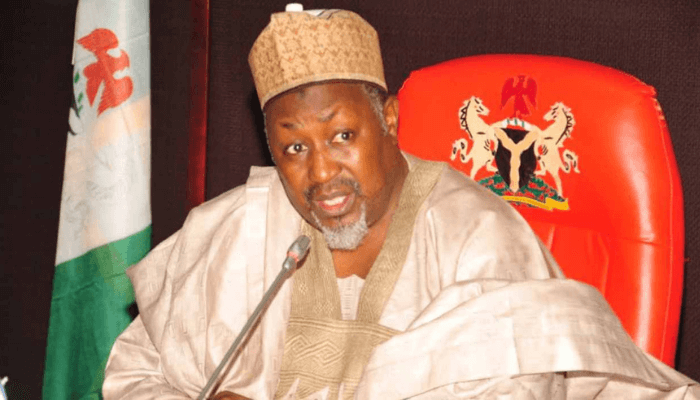
Mohammed Badaru Abubakar, Nigeria’s Minister of Defence, has confirmed the emergence of new terrorist groups—Lakurawa and Mahmuda—as security threats, while assuring citizens that the government is intensifying efforts to strengthen border security and protect national sovereignty.
Speaking during the 2025 Ministerial Press Briefing, Abubakar acknowledged ongoing security concerns, particularly along Nigeria’s porous northern borders, but pointed to progress in reducing cross-border infiltration by criminal and terrorist groups.
In response to recent attacks and growing insecurity in parts of Katsina and Zamfara States, the minister cited the reopening of key roads and markets in towns such as Jibia and Basari as evidence of improved military presence and operational success.
“With over seven Nigerian states sharing borders with Sahelian countries, securing the borders has become a national priority,” he stated.
Despite these advances, he admitted that several local governments remain under threat, pledging continuous military operations to reclaim and secure affected territories.
The emergence of Lakurawa and Mahmuda marks a worrying evolution in Nigeria’s terrorist landscape, adding to the already present threats from groups like Boko Haram and ISWAP (Islamic State in West Africa Province).
“We cannot view Nigeria in isolation. The Sahel, in particular, has become a hotbed for jihadist insurgency, compounded by fragile states, porous borders, and climate-induced displacement,” Abubakar said.
The Defence Minister emphasized the need for Nigeria’s security architecture to move from a reactive to a proactive strategy, particularly in light of transnational threats such as terrorism, cybercrime, and organised crime.
“As Africa’s most populous nation, Nigeria’s stability is intrinsically linked to that of the continent and the broader global security order.”
The Ministry of Defence outlined recent strategic achievements, while also recognising persistent challenges posed by regional instability in the Sahel and across West Africa. Abubakar reiterated the importance of international cooperation in tackling these complex, border-spanning threats.
He stressed that weak governance structures and cross-border terrorist networks continue to endanger Nigeria’s northern territories, with criminal elements exploiting lapses in regional coordination.
