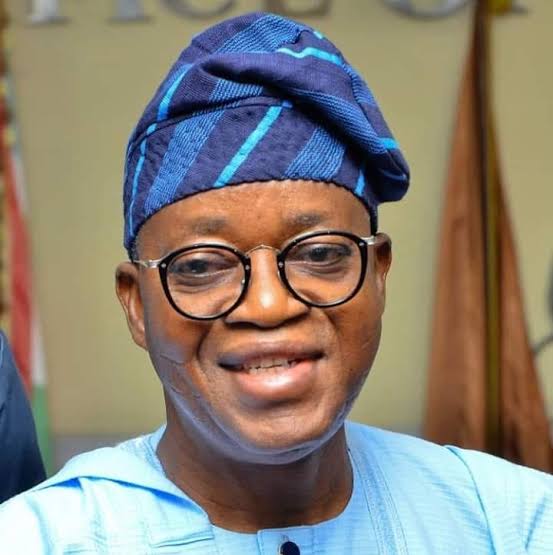
Nigeria is set to host a significant global workshop on deep seabed exploration next week in Abuja, as announced by Adegboyegaa Oyetola, Minister of Marine and Blue Economy. The workshop aims to harness Nigeria’s vast, yet largely unexplored ocean resources and enhance local expertise in managing these assets sustainably.
Oyetola, in a statement released by Osagie Edward of the Nigerian Maritime Administration and Safety Agency (NIMASA), emphasized the importance of the workshop in light of Nigeria’s recent extension of its continental shelf. “Nigeria has vast ocean resources that are still largely unexplored, and we have considered the recent extension of Nigeria’s continental shelf,” Oyetola said. “I hope this workshop will provide a platform to launch the machinery to tap into these resources sustainably, balancing economic growth with environmental protection.”
The event, hosted in collaboration with NIMASA, is designed to equip Nigerian researchers and industry professionals with essential skills and knowledge. The workshop will offer hands-on training and facilitate direct interaction with international experts and advanced technologies.
Oyetola highlighted the broader implications of the workshop, noting that the deep seabed, which lies beyond national jurisdiction, is considered humanity’s common heritage. “The deep seabed lies beyond national jurisdiction, and the mineral resources there are considered humanity’s common heritage,” he stated. He also mentioned that the workshop would address over 54 percent of the world’s oceans, presenting future opportunities for mineral resources crucial for global population growth and renewable energy needs.
Additionally, Oyetola underscored the role of the deep seabed in mitigating climate change. “The deep seabed plays a crucial role in mitigating climate change, which has a devastating impact on the sustainability of oceans and their resources,” he explained. “It is believed that the seabed contains a significant portion of the CO2 produced by human activities, thereby helping to absorb the excess heat generated by the greenhouse effect.”
In May, Nigeria’s sovereignty over an additional 16,300 square kilometers of maritime territory was approved by the United Nations, further highlighting the nation’s expanding role in global maritime affairs.
