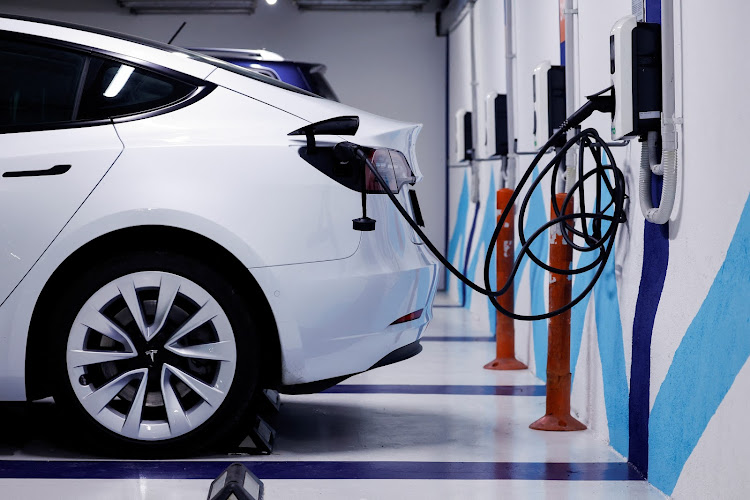
The Nigerian government, through the National Automotive Design and Development Council (NADDC), has set in motion plans to manufacture and assemble electric vehicles (EVs) locally. This initiative, announced by NADDC Director-General Joseph Osanipin in an exclusive interview with The PUNCH, follows his recent visit to the Nigeria-Morocco Business Forum.
Osanipin highlighted Nigeria’s potential in the automotive sector to Moroccan investors, particularly in areas like EV production, infrastructure development, gas-powered vehicles, and local component manufacturing. One of the key outcomes of the forum was Nigeria’s intent to partner with E-move Vehicles Company, a Moroccan EV manufacturer, to begin local EV production. The partnership seeks to enhance Nigeria’s manufacturing capabilities, advance technology skills, and reduce dependence on imported vehicles, supporting both economic growth and environmental sustainability.
“We attended Nigeria-Morocco Business Week,” Osanipin explained. “After the forum, we visited E-move Vehicles Company, a producer of electric motorcycles, tricycles, and batteries, and a leader in energy storage systems. Their expertise in battery and economical EV manufacturing is invaluable, and we aim to bring this to Nigeria.”
Osanipin noted that local production of these EVs would support Nigeria’s energy transition in transportation while creating jobs and boosting local expertise.
The NADDC team also visited Univers Acier Steel, a Moroccan company that supplies automotive parts. This partnership could open up opportunities for Nigeria to produce certain auto components locally and export them to Morocco. “We studied their regulations and identified products we can make in Nigeria and export to Morocco,” Osanipin said.
Additionally, the delegation examined Morocco’s automotive regulatory framework, visiting six testing centers and facilities like Cetiev, which certifies automotive parts. This system, which ensures high-quality standards, is one that Nigeria aims to adopt.
Describing the visit as a milestone for collaboration in automotive development, Osanipin noted, “These meetings were eye-opening and marked the start of experience-sharing on regulations, inspections, and testing.”
These partnerships signal a promising step for Nigeria to accelerate its automotive industry, support energy transition efforts in transportation, and enhance local technical expertise, paving the way for a thriving EV sector in the country.
