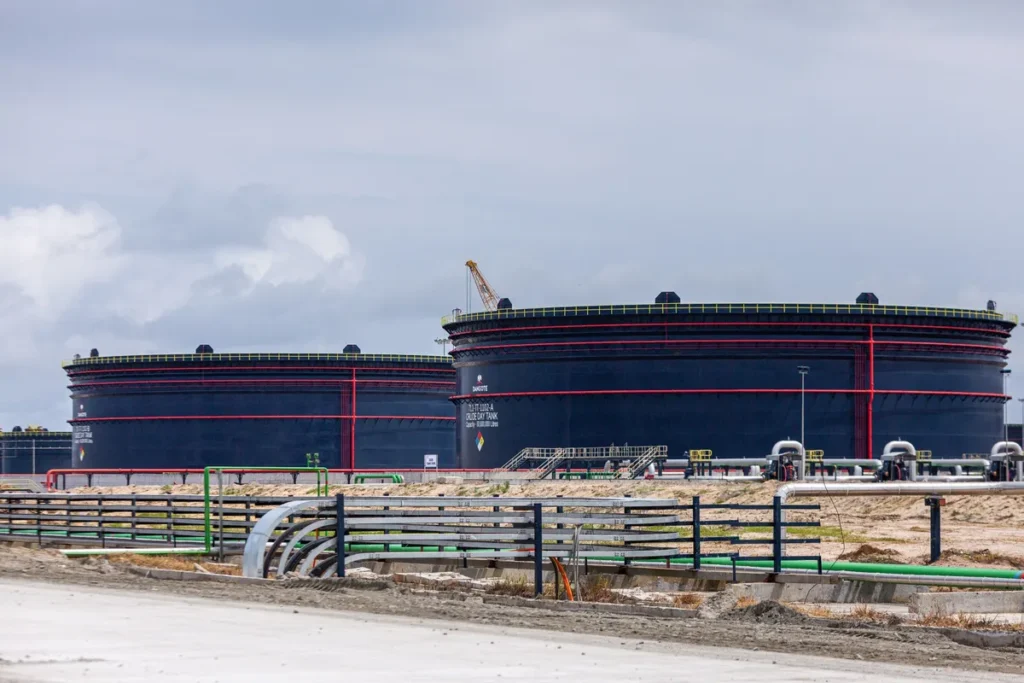
Nigeria has announced that it will settle crude oil sales to Africa’s largest oil refinery, owned by billionaire Aliko Dangote, using the local currency’s rate in the foreign exchange market. This decision aims to alleviate concerns over potentially fixed below-market naira levels for transactions.
Beginning October 1, the mega refinery will pay the local-currency equivalent of the prevailing international benchmark price of oil, calculated using the closing rate from the Central Bank of Nigeria’s Nafem window, a trading platform for investors, exporters, and end-users. This agreement represents a significant shift in the country’s approach to crude oil sales and foreign exchange, steering clear of a previous system that led to inflationary pressures and currency devaluation.
Historically, Nigeria, Africa’s largest crude producer, exported its oil while relying heavily on imported petroleum, straining its foreign exchange reserves. The introduction of local gasoline production at the Dangote refinery, which began in September, is viewed as a crucial step in reducing Nigeria’s dependency on imported fuel and saving 10% to 15% of dollar demand, according to Central Bank Governor Olayemi Cardoso.
To facilitate this transition, a committee led by Finance Minister Wale Edun negotiated the landmark sale of crude in naira to the Dangote refinery. This move is expected to ease pressure on the naira and enhance domestic gasoline supply. However, concerns arose that the government might backtrack on its currency reforms when Dangote suggested that the Edun committee would establish an “agreed” foreign-exchange rate for the transactions and fix gasoline prices.
In response to these concerns, the central bank has refrained from fixing an exchange rate for the transactions. Sources indicate that discussions around a set rate were met with resistance, as officials aim to maintain a flexible currency system. Spokespeople for both the Dangote refinery and the Central Bank of Nigeria declined to comment on the negotiations.
Additionally, the state-owned Nigeria National Petroleum Corp. (NNPC) has indicated plans to end its exclusive role as the domestic buyer of gasoline from Dangote’s refinery. This shift will allow other retailers to negotiate directly with the Lagos plant, aligning with the government’s goal of fully deregulating the market. As a result, consumers may see further increases in pump prices, which surged 45% in September, reflecting ongoing market adjustments.
The decision to avoid fixed gasoline prices could effectively eliminate subsidy payments on fuel, which amounted to approximately $10 billion in 2022, marking a significant shift in Nigeria’s energy policy as the country strives for greater economic stability.
