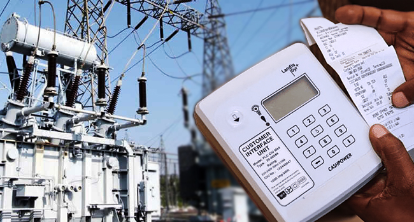
The Federal Government has announced that Nigerians should prepare for new electricity tariffs in the coming months as part of efforts to create a more sustainable energy sector.
Olu Verheijen, Special Adviser on Energy to President Bola Tinubu, confirmed the development in an interview with Bloomberg during a World Bank-backed energy conference in Tanzania.
The government is pushing for higher electricity tariffs, with prices expected to increase by about two-thirds for many consumers. According to Verheijen, this adjustment is necessary to cover the actual cost of power supply, ensure improved reliability, and attract private investment in power generation and transmission.
“One of the key challenges we’re looking to resolve over the next few months is transitioning to a cost-efficient but cost-reflective tariff,” Verheijen stated.
Balancing Higher Costs with Subsidies
While electricity costs are expected to rise, the government says subsidies will be maintained for lower-income consumers to cushion the impact. However, Nigeria’s debt-ridden electricity distribution companies have long demanded cost-reflective tariffs to improve their financial stability.
The power sector was privatized in 2013, but government-set tariffs under the Nigeria Electricity Regulatory Commission (NERC) have not covered the full cost of power supply, forcing the government to provide subsidies.
Nigeria’s Energy Infrastructure Challenges
Nigeria’s power infrastructure remains underdeveloped, with only four to five gigawatts of power reaching homes and businesses despite 14 gigawatts of installed capacity. To bridge this gap, the government is implementing several initiatives:
• A $32 billion plan to improve electricity access by 2030, with $15.5 billion expected from private investors.
• A $2.3 billion partnership with Siemens AG to upgrade transmission and distribution networks.
• Expansion of renewable energy projects, which have already provided electricity to over 7 million rural Nigerians.
Verheijen emphasized that Nigeria’s energy policies must align with its long-term economic goals, including becoming a $1 trillion economy within five years and achieving upper-middle-income status in 25 years.
With Nigeria’s current GDP under $200 billion, significant investments and structural reforms will be needed to meet these ambitious targets.
