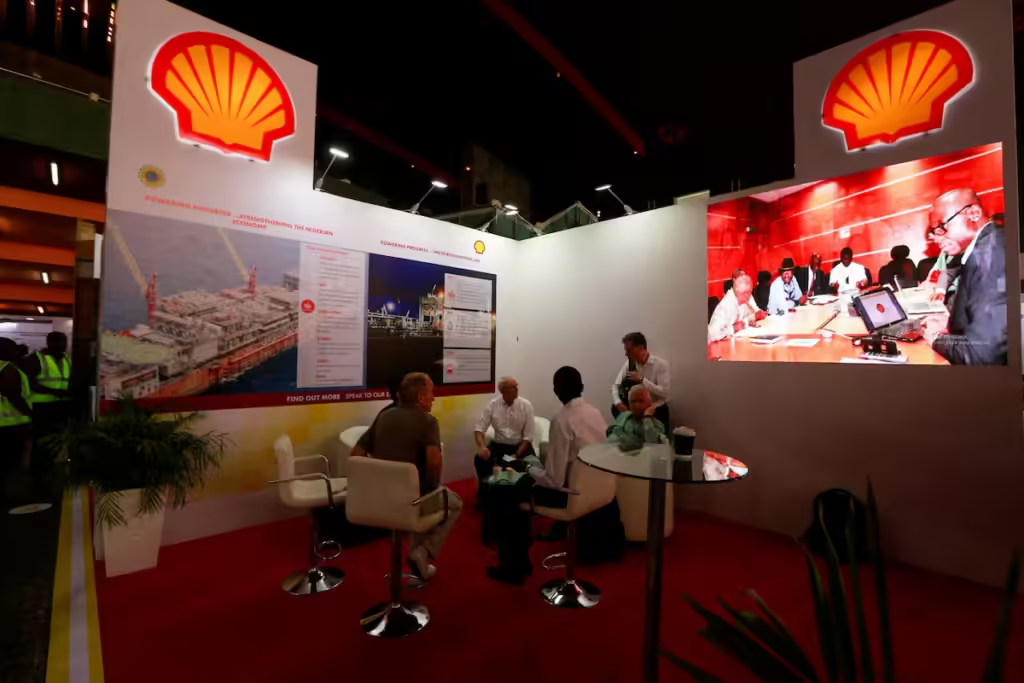
Nigeria’s decision to block Shell’s $2.4 billion sale of its onshore oil assets has raised concerns among investors, casting a shadow over President Bola Tinubu’s efforts to attract foreign investment. The deal, which would have seen Shell transfer assets to the Renaissance consortium, dominated by local firms, was halted by the country’s upstream regulator without any clear explanation.
This move has sent shockwaves through the industry, particularly as Tinubu has been working to revive Nigeria’s struggling economy, which is heavily dependent on oil revenue. Shell, one of Nigeria’s largest investors and a key player in the oil sector for over half a century, has yet to comment on the decision.
Analysts warn that the regulatory delays and uncertainties could undermine Nigeria’s appeal to foreign investors. Clementine Wallop, director for sub-Saharan Africa at Horizon Engage, a political risk consultancy, said that the government’s mixed signals are becoming a major obstacle. “The difficulty of getting regulatory approval clashes with the president’s quest to win outside investment,” Wallop said. She highlighted the long delays that foreign companies face when seeking approvals in the energy sector.
A similar deal by Exxon Mobil to sell onshore assets to Seplat Energy took more than two and a half years to gain regulatory approval, further reinforcing concerns about Nigeria’s business environment. The uncertainty comes at a critical time as the country faces a fiscal crisis, worsened by a fall in foreign investment inflows. Data from the National Bureau of Statistics showed that foreign investment dropped to $3.9 billion last year, down from $5.3 billion in 2022, continuing a five-year decline.
The blocked Shell sale also comes at a time when Nigeria’s oil production remains well below target. The country’s output is currently around 1.35 million barrels per day (bpd), far short of the 2 million bpd goal. Boosting oil production is seen as vital to alleviating Nigeria’s foreign currency shortages and stabilizing its economy.
The uncertainty in Nigeria’s oil sector has already affected other industries, with multinational companies like Procter & Gamble, GSK Plc, and Bayer AG either leaving the country or shifting to third-party distributors due to the economic instability and naira depreciation.
