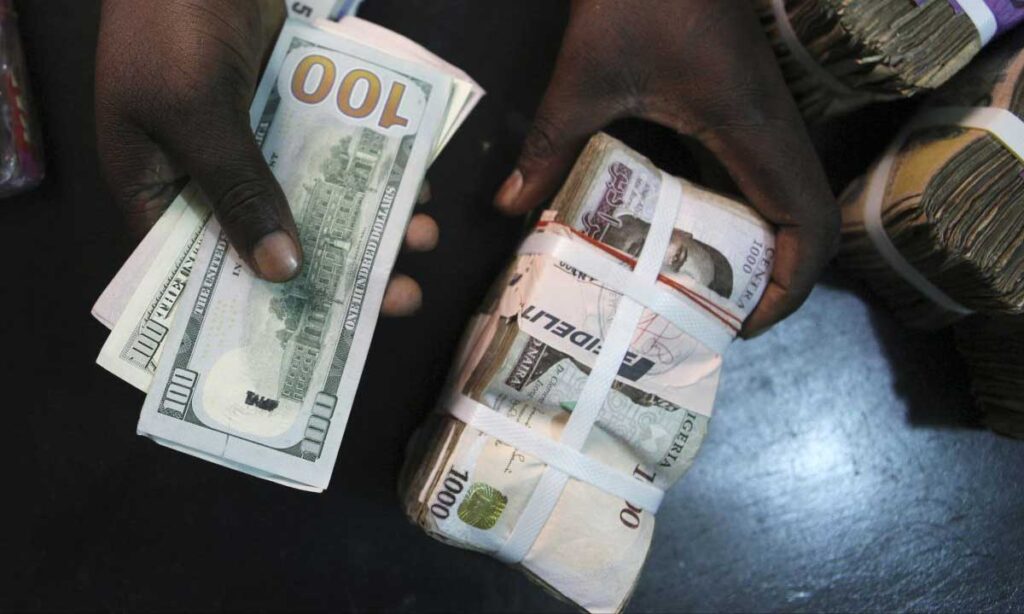
Nigeria’s foreign exchange (FX) reserves increased by $591.78 million in the month following the government’s $2.2 billion Eurobond auction on December 2, 2024. Data from the Central Bank of Nigeria (CBN) shows reserves rose from $40.29 billion on December 2 to $40.88 billion by January 3, 2025, marking a 1.47% month-on-month growth.
The positive impact of the Eurobond proceeds was evident in the steady accumulation of reserves throughout December. By December 9, reserves had grown to $40.376 billion, reflecting an $84 million increase within a week. Growth accelerated mid-month, with reserves climbing from $40.525 billion on December 12 to $40.790 billion by December 19—a $265 million rise in just seven days. By the end of December, reserves peaked at $40.884 billion and maintained their upward trajectory into January.
The surge in reserves comes at a critical time for Nigeria, as the country grapples with economic challenges, including fiscal deficits and exchange rate volatility. Proceeds from the Eurobond auction have provided much-needed liquidity, enabling the government to stabilize its external reserves while addressing financial obligations.
Year-on-year, the reserves have grown significantly. On January 3, 2024, the reserves stood at $33.042 billion, compared to $40.884 billion on January 3, 2025—a $7.842 billion increase, representing a 23.74% growth. This substantial rise is attributed to Eurobond proceeds, higher oil revenues, and the CBN’s strategic management of foreign exchange inflows.
The increase in reserves strengthens Nigeria’s ability to meet external payment obligations, such as debt servicing and import financing. Additionally, it supports efforts to stabilize the naira, which has seen notable recovery.
The naira appreciated by N125 against the dollar within a month of implementing the Electronic Foreign Exchange Matching System (EFEMS). Official CBN data indicates an 8% strengthening, with the naira trading at N1,535/$ on January 3, 2025, compared to N1,660/$ on December 2, 2024, when EFEMS launched.
Introduced on October 3, 2024, EFEMS is part of broader reforms designed to curb speculation and enhance transparency in Nigeria’s FX market. The system has been credited with improving market efficiency, contributing to the naira’s appreciation.
While the rise in reserves is a positive development, sustainability remains a concern. Heavy reliance on external borrowings like Eurobonds raises questions about fiscal policy sustainability. Nigeria’s growing debt profile and the cost of servicing these debts could strain government revenues and limit fiscal flexibility.
Nonetheless, the combination of increased reserves, strategic reforms, and currency stabilization efforts positions Nigeria to better manage its economic challenges while supporting long-term growth.
