In a positive shift for Nigeria’s economy, inflation figures for June 2025 have shown a decrease, dropping to 22.22% from 22.97% in May 2025. This marks the third consecutive month of inflation decline, with experts pointing to a combination of factors driving the drop. Notably, stability in the foreign exchange (FX) market and the seasonal availability of crops have played significant roles in the reduced inflation rate.
The National Bureau of Statistics (NBS) confirmed the figures, highlighting a marginal decrease of 0.76% in the headline inflation rate. Despite this reduction, the Consumer Price Index (CPI) rose by 2.0 points to 123.4 in June, compared to 121.4 in May 2025. However, on a year-on-year basis, inflation stood at 11.97% lower than the 34.19% recorded in June 2024.
“This drop demonstrates a decrease in the headline inflation rate when compared to June 2024, albeit with a different base year, November 2009 = 100,” said the report.
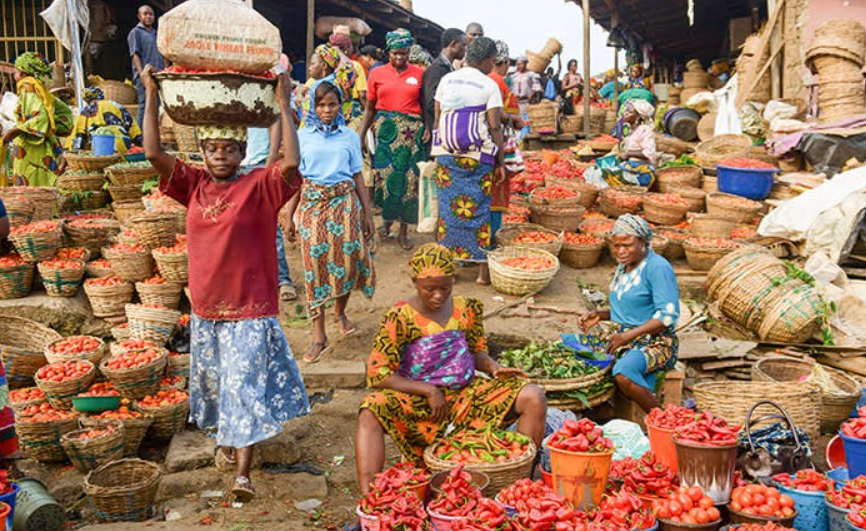
The food sector saw significant relief as food inflation dropped 18.90%, reducing from 40.87% in June 2024 to 21.97% in June 2025. However, month-on-month food inflation increased by 3.25%, driven by rising prices of staples such as tomatoes, fresh peppers, meat, and other vegetables.
Analysts note that while the exchange rate remains stable and energy prices stay relatively contained, food inflation is still a concern. “Heightened insecurity in key food-producing states like Benue continues to challenge food price stability,” stated Ebo Ayodeji, an economic expert.
The inflationary pressures, though eased, are still being driven by factors such as logistics costs, insecurity, and the high costs of imported goods. Experts have called for more policy interventions, particularly in addressing the trade policy instruments that affect the cost of imports.
Regional Breakdown: A Mixed Picture
The report also highlighted regional disparities in inflation trends. While Borno, Abuja, and Benue recorded the highest year-on-year inflation rates, with figures reaching 31.63%, 26.79%, and 25.91% respectively, Zamfara, Yobe, and Sokoto saw the lowest inflation rates.
When considering month-on-month inflation, states like Ekiti, Delta, and Lagos recorded the highest increases, while Zamfara, Niger, and Plateau saw declines.
Food inflation varied significantly across states, with Borno facing the highest at 47.40%, and states like Katsina, Adamawa, and Sokoto showing slower rises in food inflation.
Urban inflation, which stood at 22.72%, showed significant improvement compared to the previous year, while rural inflation dropped to 20.85%, marking a 11.24% decrease from June 2024.
Pressure on Prices Remains: CPPE Weighs In
The Centre for the Promotion of Private Enterprise (CPPE) acknowledged the progress made in easing inflation but warned that the rising month-on-month figures still reflect ongoing price pressures. “While year-on-year inflation shows improvement, the persistent monthly increases in both food and core inflation continue to signal underlying challenges,” the CPPE noted.
The centre urged policymakers to focus on variables such as logistics costs, insecurity, and the stability of the foreign exchange market to help manage inflationary pressures more effectively.
FX Stability: A Key Factor in Inflation Decline
One of the primary reasons for the recent decline in inflation, experts believe, is the stability of the Nigerian naira. “This has been driven by reduced volatility in the foreign exchange market, alongside minimal fluctuations in energy prices,” said Ayodeji.
Despite the progress, food inflation remains a challenge. The scarcity of key agricultural products, due to security concerns in food-producing regions, continues to exert upward pressure on prices.
In conclusion, while Nigeria’s inflation rate shows signs of easing, experts emphasize that much remains to be done. Key issues like trade policy reforms, enhanced domestic agricultural production, and tackling insecurity in farming regions need greater focus to ensure sustained price stability.
