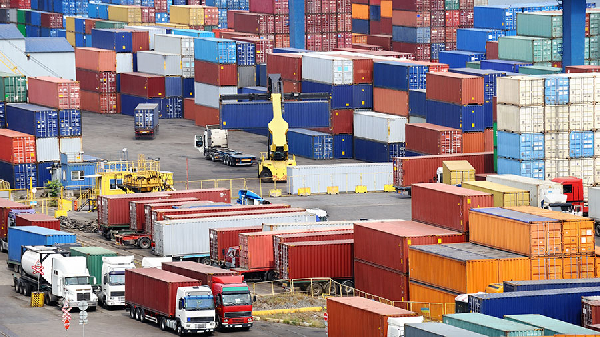
Nigeria’s non-oil exports surged to a historic N9.2 trillion in the first nine months of 2025, marking a 48% increase from the N6.2 trillion recorded during the same period in 2024, according to the latest Foreign Trade in Goods Statistics released by the National Bureau of Statistics (NBS).
The sharp growth underscores how the 2023 naira devaluation continues to reshape Nigeria’s trade landscape, boosting naira-denominated export revenues and enhancing the competitiveness of non-oil products in international markets. While this represents the strongest non-oil export performance since at least 2015, oil and gas still dominate the nation’s overall export earnings, highlighting ongoing structural limits to diversification.
Non-oil exports have expanded rapidly since the currency adjustment in mid-2023, which weakened the naira and improved pricing for Nigerian exporters abroad. Total non-oil exports for 2023 stood at N3.1 trillion, meaning the first nine months of 2025 have already tripled the value recorded in the year the currency was first devalued.
In Q3 2025 alone, Nigeria recorded N2.996 trillion in non-oil exports, up from N2.5 trillion in Q3 2024, and a remarkable increase from N683 billion in Q3 2023. Monthly figures show continued strong performance:
- July 2025: N1.23 trillion
- August 2025: N0.88 trillion
- September 2025: N0.89 trillion
On average, Nigeria is now generating close to N1 trillion per month in non-oil export receipts, a level previously unattainable under the old exchange rate regime.
Despite the record numbers, non-oil exports remain structurally subordinate, contributing roughly 12–14% of total exports in Q3 2025. Crude oil, refined petroleum products, and gas continue to dominate export revenues, leaving Nigeria’s foreign exchange inflows vulnerable to oil price fluctuations.
Sectoral breakdown of non-oil exports in Q3 2025 highlights concentration in capital-intensive and energy-linked industries:
- Chemical and allied products: N845 billion
- Prepared foodstuffs, beverages, spirits, and tobacco: N692 billion
- Vehicles, aircraft, parts, and vessels: N550.8 billion
- Vegetable products: N214.5 billion
Agricultural exports reached N786.6 billion, raw materials N1.0 trillion, and solid minerals N100.8 billion. Manufactured goods exports totaled N2.0 trillion, while energy-related manufactured products accounted for N91 billion.
However, the data also reveals Nigeria’s continued dependence on imports, with N4.75 trillion spent on imported manufactured goods against N2 trillion in domestic manufactured exports, highlighting persistent trade imbalances.
The surge confirms that Nigerian exporters are responding effectively to improved pricing incentives following the naira adjustment, demonstrating the country’s potential to generate trillion-naira monthly export receipts outside of oil under favorable conditions.
For More News Story Please Visit – www.Jocomms.com
