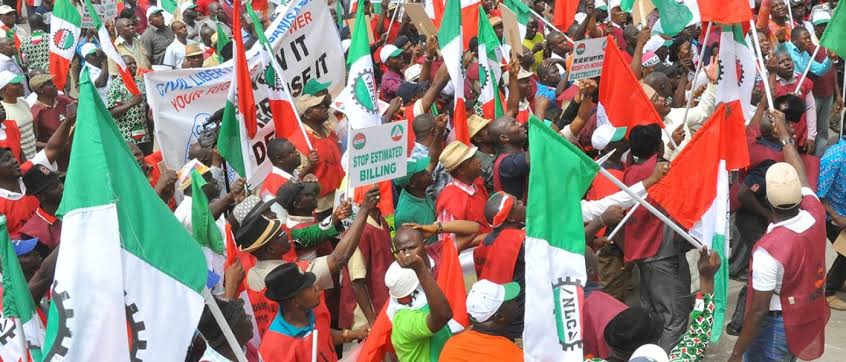
The Nigeria Labour Congress (NLC) has pledged to intensify enforcement of the ₦70,000 national minimum wage, particularly in the unorganised private sector, where some workers still earn as little as ₦15,000 per month. This renewed focus comes amid growing concerns over widespread non-compliance following the July 2024 wage law signed by President Bola Tinubu.
Speaking to The PUNCH, NLC Assistant Secretary-General Onyeka Christopher said while implementation in the public sector has seen moderate success, many private and informal employers continue to flout the law. “We will focus on the private sector to ensure every eligible worker receives the minimum wage,” he stated.
The new wage law not only raised the minimum from ₦30,000 to ₦70,000 but also shortened the review cycle from five to three years. However, labour unions argue that inflation and high living costs have already eroded the value of the new wage and are calling for annual reviews to match economic realities.
Christopher noted that some state governments have yet to comply, and that informal sector workers, often lacking formal contracts, are especially vulnerable. Labour economist Illias Aliyu urged the NLC to publicly name and shame employers who fail to comply, warning that wage increases without inflation control are meaningless. “A ₦1 million salary in a bad economy doesn’t make sense,” Aliyu said, urging structural reforms in energy and governance.
Meanwhile, the NLC also issued a fresh call for the Federal Government to expedite the rollout of Compressed Natural Gas (CNG) infrastructure, saying it is essential to ease transport costs for workers following the 2023 fuel subsidy removal.
In a communiqué released after its Central Working Committee (CWC) meeting in Abeokuta, the union acknowledged government efforts—including CNG bus donations and vehicle conversion incentives—but insisted the pace is too slow to address workers’ daily hardship. “High transportation costs are crippling workers and the general population,” the NLC said.
Though the Presidential CNG Initiative and incentives have converted over 100,000 vehicles, the NLC maintains that nationwide infrastructure is still lacking and must be accelerated for the benefits to be meaningful.
The CWC also raised several pressing issues: insecurity, citing 700,000 deaths from violent conflict in the last year; opposition to removing labour matters from the Exclusive Legislative List in the ongoing constitutional review; condemnation of alleged federal withholding of allocations to local governments in Osun State; and a warning against employers compelling workers to join specific unions, calling it a violation of workers’ rights.
The union concluded by reaffirming its commitment to economic justice, democratic governance, and the protection of workers’ rights, vowing stronger mobilisation if reforms stall or worker welfare continues to erode.
