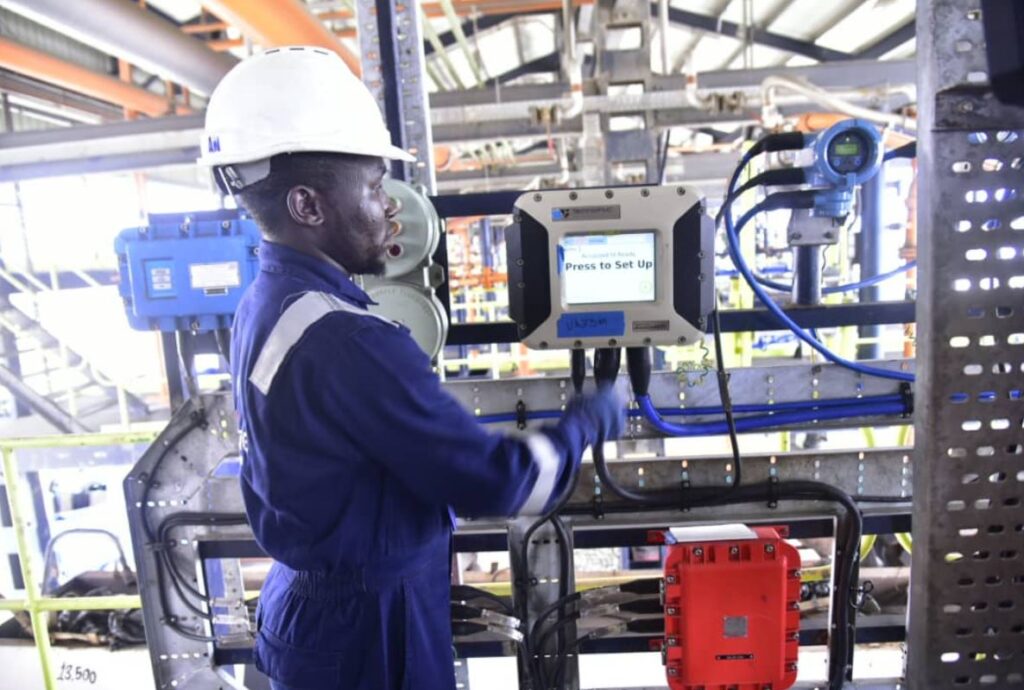
The Nigerian National Petroleum Company Limited (NNPC) has acquired the necessary equipment to establish 40 additional Compressed Natural Gas (CNG) stations nationwide, as part of efforts to promote the use of CNG as an alternative fuel to petrol. This initiative is part of the Federal Government’s plan to have 100 CNG stations operational within the next six months, according to the Programme Director and CEO of the Presidential Compressed Natural Gas Initiative (PCNGI), Oluwagbemi Michael.
Speaking in Ogun State, Michael highlighted that the NNPC has already set up 12 CNG stations in the past year, with six located in Abuja and six in Lagos. His comments came amidst complaints from Nigerians about the limited availability of CNG stations, which has slowed down the adoption of CNG as a fuel alternative.
Michael reassured the public that the government has an active infrastructure development programme in place, collaborating with the Midstream, Downstream Gas Infrastructure Fund. He disclosed that N122 billion was recently allocated to six private organizations investing in CNG distribution. “We are already taking steps to ensure sufficient CNG distribution infrastructure nationwide,” he said.
However, he acknowledged that infrastructure development takes time due to the need for planning, procurement, installation, and permitting. Despite this, the NNPC is advancing its efforts, having already acquired equipment for 40 new sites across the country.
Private companies are also stepping up their investments in CNG distribution. Michael noted that companies such as Bovas, NIPCO, Matrix, and MRS are expanding their CNG operations, with NIPCO adding 12 more stations to its existing 10. The number of refueling stations nationwide has increased from 20 to 50 in the past year, and this figure is expected to double within six months.
To further boost the adoption of CNG, the Federal Government is distributing one million CNG conversion kits to commercial drivers, creating up to 1.5 million additional CNG demands across the country. A credit scheme has also been introduced to help private vehicle owners convert their petrol-powered cars to CNG, allowing them to pay for the conversion gradually.
Michael emphasized that the government is working closely with the Nigerian Midstream and Downstream Regulatory Authority (NMDPRA) to fast-track the permitting system for existing filling stations to add CNG refueling capabilities.
NMDPRA Chief Executive Farouk Ahmed recently raised concerns about the limited number of CNG stations serving Nigeria’s 200 million population. However, Michael assured Nigerians that CNG would soon be available across the country, touting it as a safer and cheaper alternative to petrol.
With the NNPC’s commitment to expanding CNG infrastructure and the involvement of private sector investors, the government is optimistic that CNG will become a key part of Nigeria’s energy future.
