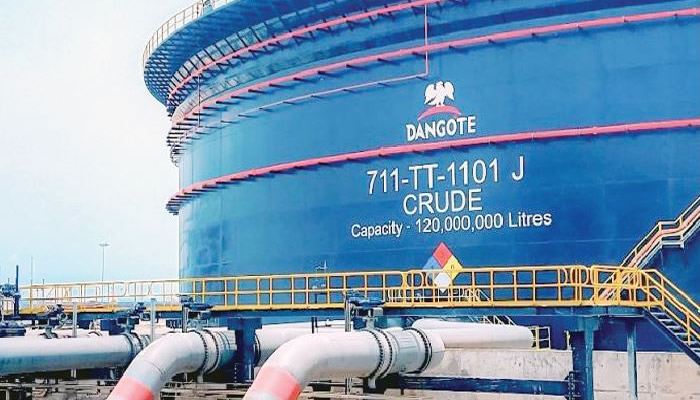
In a major shift, the Nigerian National Petroleum Company Limited (NNPC) has ceased importing refined petroleum products and now sources fuel exclusively from domestic refineries, including the Dangote Petroleum Refinery. Mele Kyari, NNPC’s Group Chief Executive Officer, disclosed this at the Nigerian Association of Petroleum Explorationists conference in Lagos. The conference, themed ‘Resolving the Nigerian Energy Trilemma: Energy Security, Sustainable Growth, and Affordability,’ also addressed energy security, fuel affordability, and the nation’s sustainable growth.
This transition arrives as independent marketers contend they could import fuel and sell it cheaper than domestic refineries. The reform reflects President Bola Tinubu’s plan to curb Nigeria’s costly dependence on imported fuel. Tinubu recently stated that the launch of compressed natural gas (CNG) could save Nigeria over N2 trillion monthly, previously spent on imported fuel, by allowing investment in other critical sectors such as healthcare.
Moving Toward Domestic Refineries
Kyari emphasized that NNPC is fully committed to supporting domestic refineries, rejecting allegations that it seeks to sabotage local refining, specifically Dangote’s. He clarified that NNPC has chosen to prioritize Nigerian crude in the domestic market, where its high quality—referred to as “Lamborghini crude”—commands a premium price. “We are proud part-owners of Dangote refinery,” Kyari stated. “We saw an opportunity to supply the domestic refinery, not just Dangote, but any other operating within the country.”
Addressing pricing concerns, Kyari acknowledged the premium associated with Nigeria’s high-grade crude, which can make domestic fuel more costly than imported blends. Nonetheless, he expressed confidence in the economic and environmental value of domestic refining.
Impact on Foreign Exchange and Inflation
The domestic shift is projected to ease the demand on Nigeria’s foreign exchange reserves. According to Kyari, eliminating the need to import petroleum in U.S. dollars could stabilize the naira and control inflation, given that fuel imports historically contributed to significant exchange rate pressures.
Settlement of Longstanding Debts
NNPC also achieved a major financial milestone by clearing a longstanding $2.4 billion debt owed to International Oil Companies (IOCs), which had strained partnerships in previous years. The debt settlement was made possible through the removal of fuel subsidies, which historically diverted NNPC’s resources from core upstream operations. Kyari commended President Tinubu’s bold decision to end subsidies, stating that it has freed up resources to focus on Nigeria’s oil production and energy security.
Advancing Compressed Natural Gas Infrastructure
To further diversify Nigeria’s energy landscape, Kyari announced that NNPC is on track to complete 12 CNG “mother stations” by the first quarter of 2025. This infrastructure expansion, along with a mini LNG plant, is expected to supply cleaner, affordable energy to smaller power plants and commercial transportation, reducing the country’s reliance on more expensive imported fuels.
Confronting the Energy Security Challenge
Despite these strides, Kyari acknowledged that half of Nigeria’s population still lacks access to electricity, and over 70% lacks access to clean fuel. He reaffirmed NNPC’s commitment to increasing domestic energy access, describing the company as a key driver in meeting Nigeria’s energy needs.
This new direction by NNPC marks a significant move in reducing Nigeria’s reliance on fuel imports, bolstering the domestic energy sector, and setting the foundation for a more resilient and affordable energy landscape.
