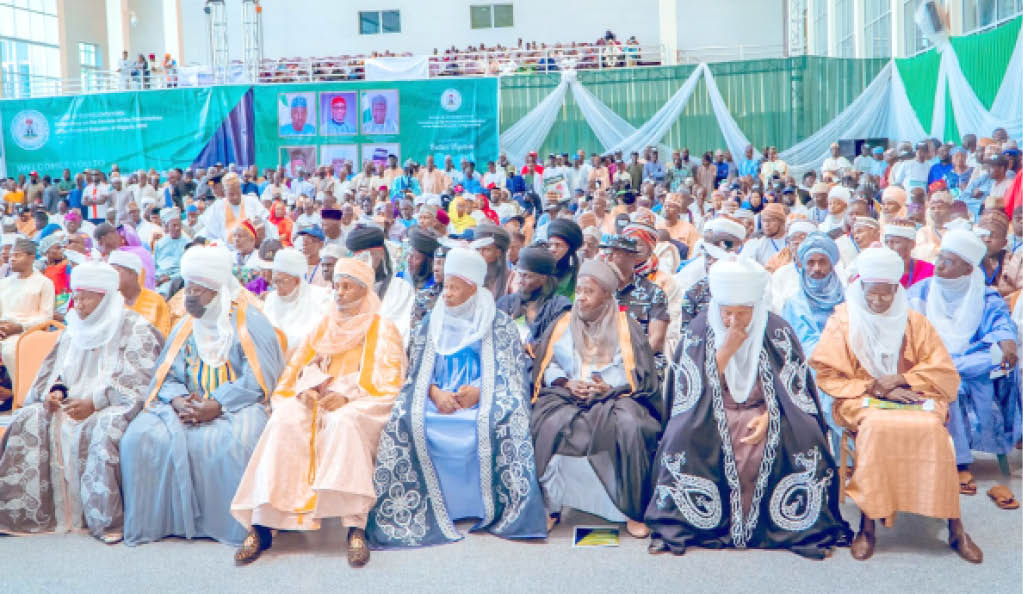
The recent public hearings for the review of Nigeria’s 1999 Constitution held in the North’s three geopolitical zones—North East, North West, and North Central—have seen an overwhelming demand for the creation of new states, additional local government areas (LGAs), and an enhanced role for traditional rulers in governance.
The House of Representatives committee charged with reviewing the 1999 Constitution embarked on zonal hearings across the North to gather feedback and proposals from stakeholders on constitutional amendments. Over the weekend, public hearings in the North West, North Central, and North East zones presented a platform for diverse calls for change.
Creation of New States and LGAs
A significant portion of the conversation focused on the demand for the creation of new states. The committee received 46 formal requests for new states and 117 proposals for new LGAs. The calls came from various groups, including political and civil organisations, advocating for more states to address regional imbalances.
In the North East, hearings were held in both Borno and Gombe states, where proposals included the creation of Amana State from Adamawa, Savannah State from Borno, and Katagum State from Bauchi. Similarly, demands for the creation of Muri, Kwararafa, and South Sardauna states from Taraba were submitted.
Alhaji Sali Bello, leader of the Amana State movement, argued that the creation of Amana State was long overdue, highlighting the region’s neglect in the country’s governance. “We’ve been unjustly treated for years,” said Bello, stressing the importance of Amana’s creation to rectify long-standing issues.
In Gombe, the call for Savannah State was echoed by Amb. Dauda Danladi, who stressed that the state’s creation, long agitated for over four decades, would drive economic development in the region.
The Role of Traditional Rulers
At the same hearings, numerous groups proposed the recognition of traditional rulers as official constitutional bodies. Borno’s Shehu, Dr Abubakar Inn Umar Garbai El-kanemi, and the Emir of Gombe, both highlighted the importance of defining a formal role for traditional institutions within the constitution. “The role of traditional rulers must be acknowledged in a modern constitutional framework,” said the Shehu.
Women’s Empowerment and Representation
Another prominent issue raised across all regions was the call for reserved seats for women in legislative bodies. Hon. Zainab Gimba, the member representing Bama, Ngala KalaBalge Federal Constituency, emphasised the need for women to have a more prominent voice in the nation’s political processes. “A constitutional provision for women’s reserved seats is essential for inclusive governance,” she stated.
Devolution of Power and State Police
Calls for decentralisation of power and the creation of state police were voiced at the hearings, particularly in North Central and North West zones. Advocates for state police argued that localised policing would better address the region’s unique security challenges, such as insurgency and banditry.
Kogi State’s Governor, represented by Barrister Muzi Yinus Abdullahi, also called for constitutional recognition of the state’s authority over its mining sector. “Kogi is a significant mining hub, and the state should have the power to regulate and legislate in this sector,” he said.
Diverse Proposals and Regional Specificity
In the North Central, demands for the creation of Kainji and Edu states were discussed, alongside proposals to allow state governors greater authority over local councils. Stakeholders also pushed for constitutional provisions that would grant autonomy to local governments and provide for fiscal federalism.
The Debate on State Police
While state police received support in some regions, others like the Northern Coalition for Peace and Development raised concerns about the potential for abuse. Despite these reservations, the ongoing public hearings have highlighted the urgent need for a broader, more inclusive constitutional framework.
Challenges in Constitutional Amendments
The journey to amend the 1999 Constitution has been fraught with challenges. The Senate leader, Opeyemi Bamidele, confirmed that the National Assembly aims to submit the ongoing review to the 36 state assemblies by December 2025. However, historical setbacks, such as the failure to reach a two-thirds majority in state houses of assembly, have hindered past amendment efforts.
A Call for Deeper Reforms
As the process continues, many participants are calling for substantial reforms that move beyond simple amendments. The inclusion of women, the devolution of powers, and the strengthening of local governance are issues that resonate across all northern zones, with diverse stakeholders stressing the need for a more equitable and responsive system.
