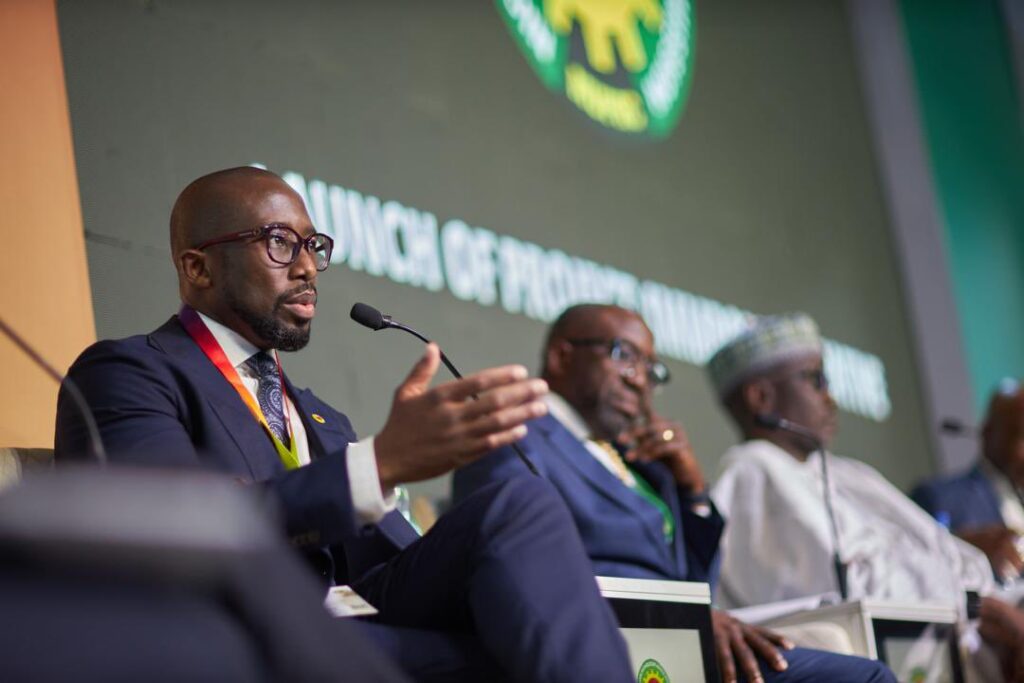
Oando Plc has called on the Federal Government and regulatory bodies, including the Nigerian Upstream Petroleum Regulatory Commission (NUPRC), to address the pressing issues of security and pipeline vandalism in order to enhance crude oil production. Ainojie Irune, Managing Director of Oando Energy Resources Nigeria Limited (OERNL), made the remarks during the NUPRC’s third-anniversary celebration in Abuja, where the commission unveiled its new initiative to add an additional one million barrels of oil per day (bpd).
During the event, Irune emphasized the critical role of the government and regulators in resolving the security challenges that have plagued the oil sector, particularly the constant vandalism of pipelines, which has hindered the country’s crude production capabilities. “We need to prioritise process and production safety over quick wins and the continuous belief in the perspective of value first; otherwise, all our ambitions to produce millions of barrels will be set to fail from the start,” Irune stated.
He pointed out that in September 2024, Nigeria’s average daily crude oil production fell to 1.32 million bpd, significantly below its OPEC quota of 1.5 million bpd. The NUPRC’s new initiative aims to increase the country’s output to 2.5 million bpd over the next two years. However, Irune noted that achieving this target would require addressing the fundamental issues of pipeline security and vandalism, which have long plagued Nigeria’s oil infrastructure.
Security and Vandalism: A Persistent Threat
Irune highlighted the challenges posed by the deteriorating state of pipelines, citing security breaches and frequent interruptions caused by vandalism as major hindrances to production efficiency. He stressed that resolving these issues was crucial to enabling oil producers to meet their targets and efficiently evacuate the crude oil they produce.
“The alignment of all major players along the value chain is the only way to tackle the challenges and generate long-term results,” Irune said, calling for greater collaboration among government agencies, oil companies, and other stakeholders to address these systemic issues.
NUPRC’s Role in Driving Industry Transformation
Irune praised the NUPRC for its proactive approach to transforming the oil and gas sector. He commended the commission for setting ambitious goals and promoting business transformation, which he described as a shift from the traditional role of merely enforcing regulations. He also acknowledged the Nigerian National Petroleum Company (NNPC) for its recent efforts in revitalizing the sector, particularly in personnel and decision-making processes.
“For the first time in our nation’s history, we have witnessed a regulatory body actively promoting business transformation rather than simply enforcing regulations,” Irune remarked. He further emphasized that these changes are essential for the long-term success of Oando and the broader oil and gas industry.
NUPRC’s Achievements and Future Goals
Gbenga Komolafe, CEO of the NUPRC, outlined the commission’s achievements since the passage of the Petroleum Industry Act (PIA) in 2021. Komolafe noted that the commission has introduced 25 critical regulations, 17 of which have already been implemented, leading to improved regulatory clarity and investor confidence. He also highlighted the growth of Nigeria’s oil and gas reserves, which now stand at 37.7 billion barrels of oil, representing 30% of Africa’s total reserves.
Komolafe urged industry stakeholders to continue collaborating with the government as it implements necessary reforms to ensure Nigeria’s oil sector remains competitive, productive, and attractive to investors.
As Nigeria works to increase its oil production and meet its OPEC quota, the issues of security and infrastructure integrity will remain central to the conversation. Oando Plc’s call for action underscores the urgency of addressing these challenges in order to unlock the country’s full production potential.
