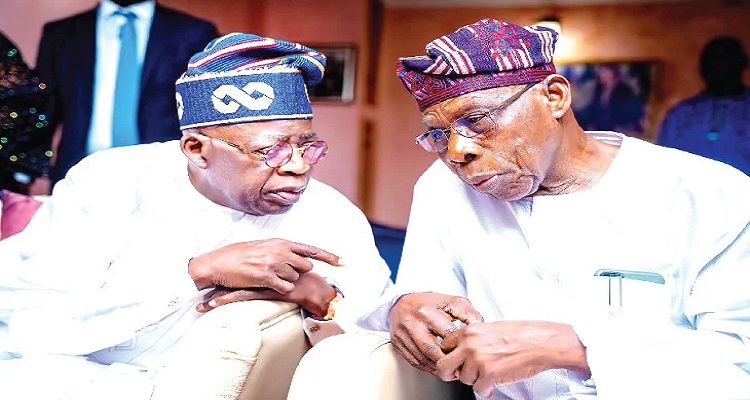
A recent interview with former President Olusegun Obasanjo on News Central Television has set off a wave of discussions across social media, as Obasanjo remarked that Nigeria’s current President, Bola Tinubu, came into office “without a plan.” However, he acknowledged that the so-called “planless” president is implementing bold economic reforms—some of which Obasanjo initiated but later abandoned.
The discussion spotlighted a significant policy challenge that has plagued multiple Nigerian administrations: fuel subsidy removal. Since 1973, every president has wrestled with this highly contentious issue, which Obasanjo described as a potential catalyst for social unrest if not handled correctly. During his presidency, Obasanjo attempted to deregulate the downstream oil sector but faced staunch opposition from organized labor and civil society, ultimately shelving the full policy. His administration only managed to raise fuel prices four times, leaving complete deregulation out of reach.
In a historic shift, President Tinubu took decisive action, removing the fuel subsidy shortly after taking office—an effort that he argues is essential for redirecting Nigeria’s economic trajectory and enhancing public finance management. This move, which Obasanjo deemed too challenging to fully implement during his tenure, is part of what Tinubu describes as his “Renewed Hope 2023: Action Plan for a Better Nigeria,” an eight-point agenda he presented during his campaign.
The interview also resurfaced Obasanjo’s 2003 national broadcast, where he had strongly advocated for full deregulation, despite substantial pushback from labor unions. He emphasized that maintaining government control over fuel pricing had cost Nigeria billions of naira and hindered private-sector investment in refinery construction, which could have created jobs and expanded fuel access. The former president warned of the consequences of a partial approach to deregulation, asserting that full reform could have improved service delivery and alleviated Nigerians’ frustrations.
Comparisons between Obasanjo’s and Tinubu’s approaches to the subsidy issue highlight divergent leadership styles. Obasanjo, despite his accomplishments, faced critiques for his hesitancy on critical economic issues, while Tinubu has taken a more direct approach, opting to implement reforms immediately. Supporters argue that Tinubu’s actions reflect his commitment to Nigeria’s long-term economic stability, even if the decisions are unpopular.
Tinubu’s administration has outlined additional priorities, including expanding gas infrastructure and competing in European markets, a focus he views as critical for economic revitalization. He has also prioritized consumer credit access and educational loans for Nigerian youth through initiatives like NELFUND and the Nigerian Consumer Credit Corporation (CrediCorp).
The debate over Obasanjo’s comments ultimately underscores the contrasting paths of two leaders faced with similar challenges. While Obasanjo’s reforms were significant, Tinubu’s supporters contend he has undertaken a more comprehensive and actionable plan to address Nigeria’s economic obstacles, hoping to fulfill what his predecessors left unfinished.
