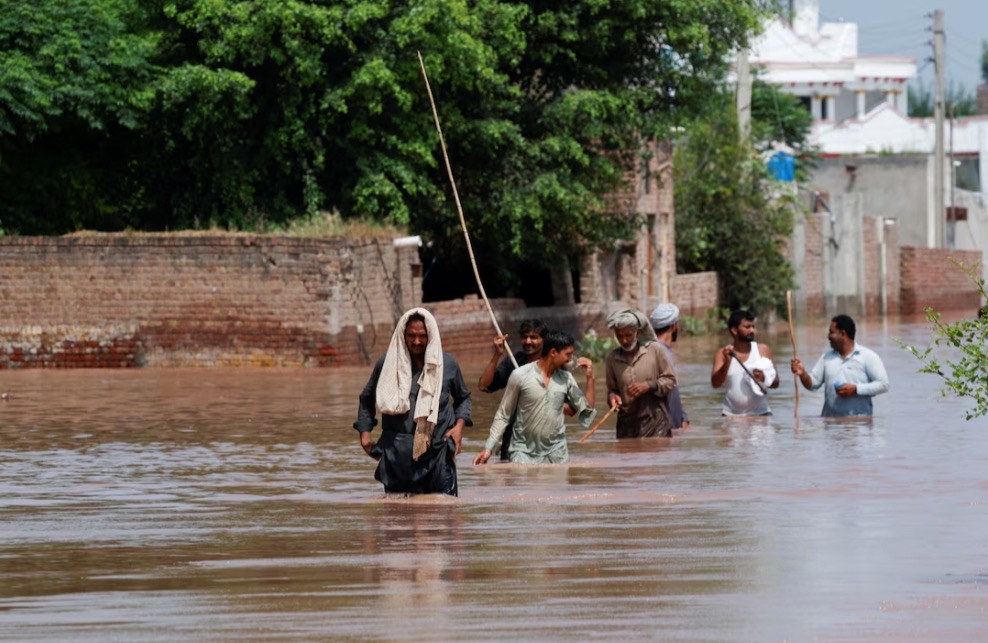
Pakistan’s Punjab province is reeling from the worst floods in its history, with rescue teams evacuating nearly half a million stranded people as swollen rivers submerged thousands of villages.
Triggered by unusually heavy monsoon rains and the release of dam waters from neighboring India, the Ravi, Sutlej, and Chenab rivers have overflowed, inundating large swathes of farmland and displacing millions.
A Crisis of Unprecedented Scale
Officials estimate that more than 2 million people have been affected, with over 2,300 villages under water. The disaster has wiped out crops across millions of acres in Pakistan’s breadbasket province, threatening food supplies and fueling fears of economic instability.
Evacuation and Relief Operations
Authorities say around 481,000 people and 405,000 livestock have been rescued, while Reuters reports the number could be as high as 760,000 evacuees. More than 800 boats and 1,300 personnel are involved in what officials describe as the largest rescue effort in Punjab’s history.
Over 500 relief camps, along with 351 medical and 321 veterinary units, have been established to house and treat survivors.
Mounting Humanitarian Toll
At least 33 people have died in Punjab in the past week, while nationwide monsoon-related deaths since June have surpassed 800, with more than 1,100 injured. Health officials warn of an impending public health crisis, as stagnant water and overwhelmed sanitation systems raise the risk of cholera, malaria, hepatitis, diarrhoea, and skin infections.
Agriculture and Economy at Risk
The floods have devastated Punjab’s agricultural heartland, destroying rice, cotton, and maize crops. Analysts fear this could worsen food shortages and inflation, compounding Pakistan’s fragile economic outlook.
