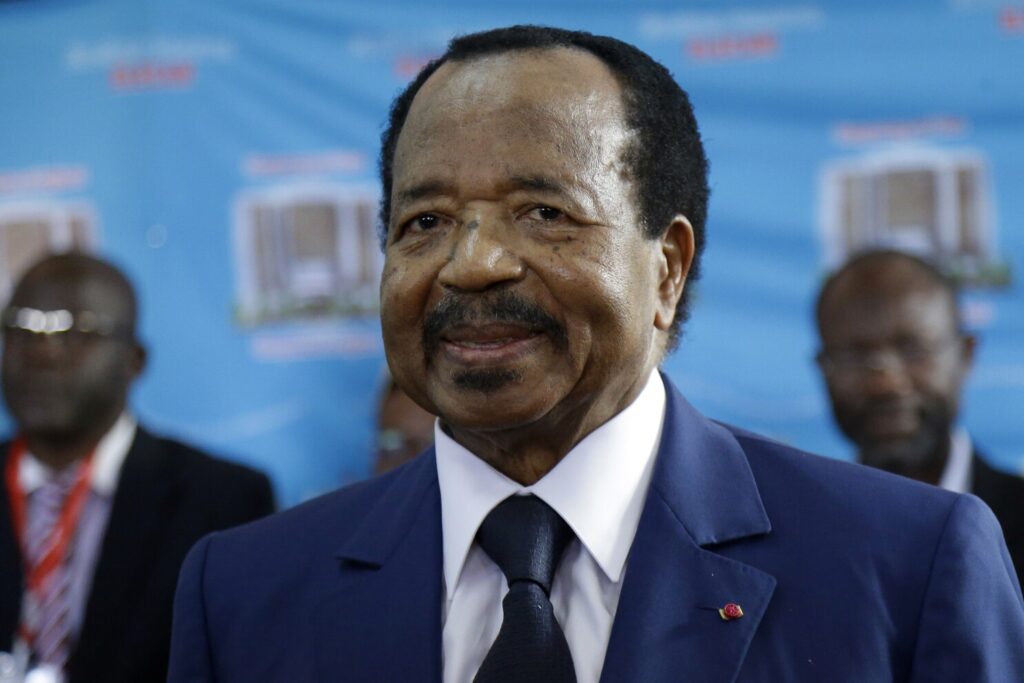
Cameroon’s President Paul Biya, the world’s oldest head of state, turns 92 on Thursday, marking more than four decades in power. However, he remains silent on whether he will seek another term in this year’s elections.
Despite the uncertainty, many—including the deeply divided opposition—believe that Biya, who first took office in 1982, will run for an eighth term in October’s vote.
Following the contentious 2018 election, Biya tightened his grip on power, with dissent met by repression, arrests, and prison sentences, according to human rights groups.
“The president has already said that he will announce his decision regarding the election at the appropriate time,” government spokesman and Communication Minister Rene Emmanuel Sadi stated last month.
Biya has never named a successor, and discussing who might replace him remains taboo.
“In the current context, even if he were lying on a stretcher, candidate Biya will be re-elected,” former minister Garga Haman Adji said in a July interview with the daily Mutations.
Concerns over Biya’s health intensified last year when he vanished from public view for weeks. Amid persistent rumors, authorities confirmed he was in Switzerland, a favored retreat where he frequently stays in luxury resorts. The government subsequently banned local media from reporting on his health.
Since his return on October 21, Biya has made few public appearances—mostly limited to official photos at the presidential palace, a regional summit in Yaoundé, and a handful of televised speeches.
As in past election years, calls for him to run again have surfaced across Cameroonian society.
“My determination to serve you remains intact and grows stronger every day, given the challenges we face,” Biya said in his end-of-year address, citing “massive support.”
In January, traditional leaders pledged their “total and unwavering” backing. On social media, some supporters insisted Biya remains “strong” and could serve two more terms.
However, his government is frequently accused by international rights organizations of suppressing opposition.
Biya’s controversial re-election seven years ago led to widespread political repression. Yet, few openly demand that he step down.
“Recently, the anxieties of most Cameroonians have turned into cries of distress over the worsening misery and decline of our beautiful country,” Catholic bishops said at an episcopal conference, condemning corruption, unemployment, and ongoing violence.
Since 2009, Cameroon’s Far North has
