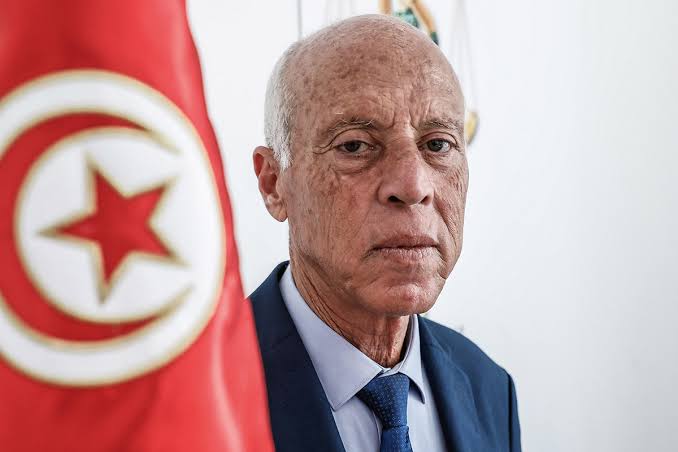
Polls closed Sunday night following a presidential election in Tunisia, where incumbent Kais Saied is poised to secure another five years in office, even as significant opposition remains largely silenced. Rights groups express fears that Saied’s re-election will further entrench his authority in a nation that once stood as a beacon of democracy following the Arab Spring uprisings.
Since the ousting of long-time dictator Zine El Abidine Ben Ali in 2011, Tunisia has celebrated its democratic progress. However, the political landscape shifted dramatically after Saied’s election in 2019, culminating in a sweeping power grab in 2021 that saw him rewrite the constitution and crack down on dissent, prompting criticism from both domestic and international observers.
In a rallying speech ahead of the election, Saied urged citizens to participate in a “massive turnout to vote,” proclaiming the need to usher in an era of “reconstruction.” Despite this call, early voter turnout figures were disappointing. By 1:00 PM on election day, only 14 percent of the 9.7 million eligible voters had cast their ballots, with estimates suggesting an overall turnout of around 30 percent—similar to that of a widely boycotted constitutional referendum in 2022.
At a polling station in the affluent Ennasr neighborhood, Saied and his wife cast their votes early in the day. Meanwhile, in working-class districts like Bab Jedid, reports indicated a lack of voter enthusiasm, with most attendees being elderly men.
Public sentiment appears divided. “I came to support Kais Saied,” said 69-year-old Nouri Masmoudi. In contrast, 40-year-old Hosni Abidi expressed distrust, stating, “I don’t want people to choose for me. I want to check the box for my candidate myself.”
The Tunisian electoral board, ISIE, faced criticism for barring two local independent watchdogs from monitoring the voting process. Moreover, the political landscape is heavily skewed, with over 170 individuals detained on political grounds, including notable opposition leaders such as Rached Ghannouchi, head of the Islamist-inspired Ennahdha party, and Abir Moussi of the Free Destourian Party.
Young voters, like 22-year-old Wajd Harrar, voiced skepticism about their choices. “I will give my vote to the least bad candidate,” she remarked, recalling the disappointment from the last election. Another voter, 21-year-old Mohamed Aziz, emphasized the importance of making the right choice for the country’s future.
As Tunisia grapples with economic challenges, including high inflation and unemployment, many citizens are concerned that another term for Saied could exacerbate these issues and further entrench his authoritarian regime.
On the day of the election, protesters gathered in the capital, denouncing Saied as a “Pharaoh manipulating the law.” Among the few contenders standing against Saied was former lawmaker Zouhair Maghzaoui, who had previously supported Saied’s power consolidation, and Ayachi Zammel, a businessman currently incarcerated on charges related to his candidacy.
As the electoral board prepares to announce preliminary results by Wednesday, the nation remains on edge, wondering what the future holds for a democracy that now seems increasingly fragile.
