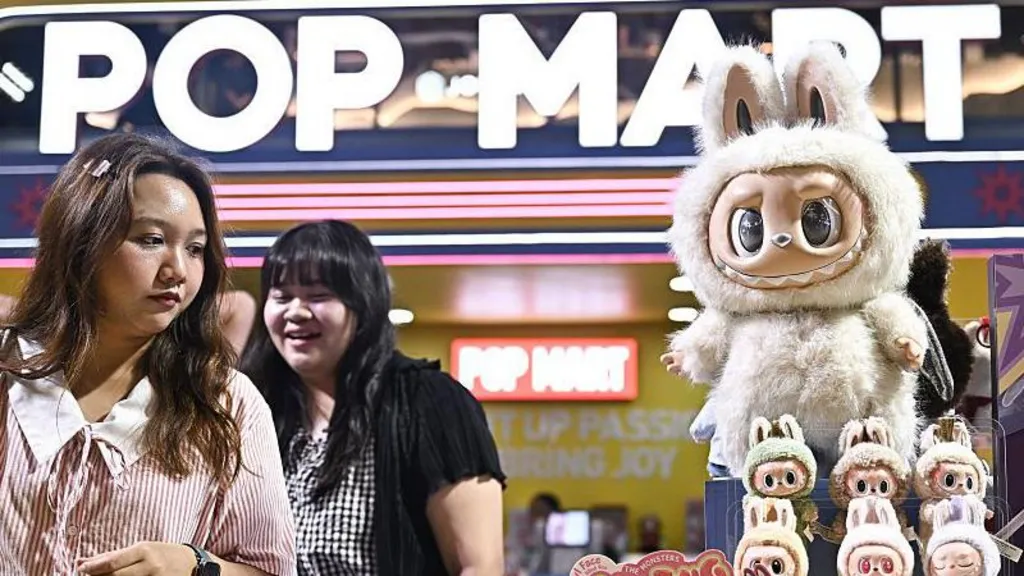
Pop Mart, the Chinese toy giant responsible for the wildly popular Labubu dolls, has announced an extraordinary profit surge, with figures set to rise by at least 350% for the first half of 2025. The company, which launched Labubu dolls in 2019, reported that its revenues had more than tripled during this period, driven by an explosive demand for the collectible dolls.
The Beijing-based company’s stock market valuation, now over $40bn (£31.6bn), has experienced a dramatic 600% increase in the last year alone. This meteoric rise is credited to the growing global recognition of the brand, particularly the viral success of the Labubu dolls, which have become a cultural phenomenon in multiple markets, including the United States.
Labubu Dolls: From Niche Collectibles to Global Sensation
Labubu, the fictional elf-like creatures with jagged teeth, have quickly become a must-have item for collectors worldwide. The dolls’ release in “blind boxes”—a marketing strategy where the toy inside is concealed—has fueled a buying frenzy, leading to long queues in shops and creating a booming resale market. Initially sold at around $10, some Labubu dolls are now fetching hundreds of dollars, with rarer versions commanding even higher prices.
In June 2025, a human-sized Labubu doll sold for a staggering $150,000 at an auction in Beijing. The popularity of Labubu has also led to a surge in counterfeit versions, often sold under the name “Lafufu.” Chinese authorities have intensified their crackdown, seizing over 46,000 fake Labubu dolls as part of their efforts to address the growing black market.
Global Expansion and Celebrity Endorsements Fuel Growth
Pop Mart’s aggressive global expansion has paid off. Sales from outside mainland China accounted for nearly 40% of the company’s revenue in 2024. This growth was especially notable in the United States, where Pop Mart operates fewer than 40 stores compared to nearly 400 in China. Labubu’s popularity in the U.S. was further amplified by celebrity endorsements from figures like Kim Kardashian and Lisa of the K-pop group Blackpink. These partnerships, combined with the company’s collaborations with global brands such as Coca-Cola and the manga franchise One Piece, have solidified Labubu’s position as a global pop culture icon.
The Blind Box Phenomenon and Market Criticism
Pop Mart’s signature “blind box” packaging has garnered both praise and criticism. While it has undoubtedly contributed to the dolls’ success, some argue that it promotes gambling-like behaviour and compulsive buying, particularly among young consumers. Despite these concerns, the company’s innovative marketing strategies have proven to be a major driver of sales, both in physical stores and through online platforms.
A Booming Resale Market and the Potential for Continued Growth
The success of Labubu dolls has created a vibrant resale market, with rare dolls changing hands for eye-watering sums. According to Vinci Zhang, senior analyst at equity research firm M Science, the sales growth in the U.S. has been staggering, with sales of Labubu dolls increasing by 5,000% in June compared to the same month last year. “I’ve not seen anything like this from other toy companies,” Zhang remarked, highlighting the unprecedented growth of the brand.
As Pop Mart continues to scale up its operations—boasting over 2,000 vending machines and stores worldwide—the company is eyeing even greater opportunities, particularly in international markets. Despite operating on a smaller scale in the U.S., Pop Mart’s potential in the region is significant, and the company’s global strategy will likely see it continue to expand rapidly over the coming years.
Counterfeiting Concerns and Legal Action
Pop Mart’s meteoric rise has also attracted a wave of counterfeiters. Chinese authorities have been actively cracking down on fake Labubu dolls, with major raids and seizures across the country. The demand for authentic Labubu toys is so high that even counterfeit versions have found a market, though Pop Mart’s legal team is aggressively protecting the brand’s intellectual property.
