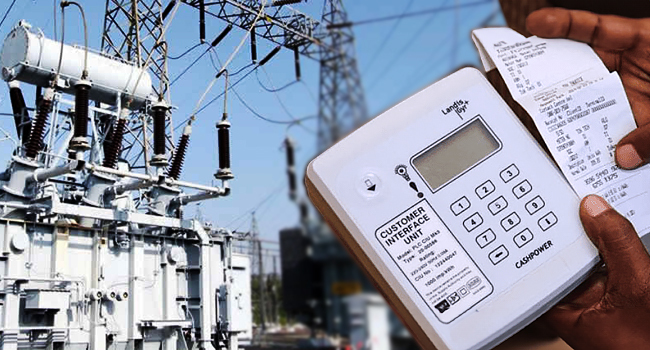
Electricity consumers on Band A feeders may face another potential tariff hike as the federal government’s electricity subsidy surged to N181.63 billion in September, up from N102.30 billion in May, signaling increased financial pressure on the power sector.
In April, the Nigerian Electricity Regulatory Commission (NERC) removed the subsidy for Band A customers, who enjoy at least 20 hours of power daily. This led to an increase in their tariff to N225 per kilowatt-hour (kWh), sparking widespread outcry from labor unions and critical sectors like health and education, whose electricity bills skyrocketed. The tariff was briefly reduced to N206.80/kWh in May when the subsidy dropped, but it climbed again to N209/kWh in July as the subsidy rose to N158 billion.
The subsidy continued its upward trajectory in subsequent months, reaching N163.87 billion in July, N173.88 billion in August, and N181.63 billion in September. This has fueled speculation that another tariff hike may be imminent under the October Multi-Year Tariff Order (MYTO) unless the cost of power generation sees a decline.
The ongoing foreign exchange crisis is a major factor driving the rising subsidy. NERC reported the exchange rate at N1,494.1 in July, N1,564.3 in August, and N1,601.5 in September, with inflation and the exchange rate being key determinants of power production costs. According to the MYTO-2024 order, changes in these indices, including generation capacity and gas prices, directly affect the determination of cost-reflective tariffs.
Despite rising costs, the government has yet to approve another tariff hike, possibly due to the current economic challenges facing Nigerians, including the soaring cost of petrol. Some electricity distribution companies (Discos), however, are already pushing for the removal of subsidies across all customer bands, citing operational losses. These Discos argue that the non-cost-reflective tariffs in Bands B, C, and D make it difficult to off-take excess electricity from the grid.
The Abuja Electricity Distribution Company (AEDC) reported a generation cost increase from N87.33/kWh in May to N113.69/kWh in September, with end-user tariffs pegged at N195.5/kWh in the same month. Despite the rise in generation costs, the allowed tariffs for Band A customers remained unchanged over the past three months, further straining the financial stability of power companies.
Minister of Power, Adebayo Adelabu, recently criticized Discos for rejecting power from the grid, noting that generation peaked above 5,000 megawatts, but had to be reduced by 1,400MW due to the inability of Discos to pick the supply. Adelabu called on Discos to increase energy off-take to prevent grid instability, as the government aims to boost generation to 6,000MW by year-end.
As the electricity sector grapples with subsidy pressures, foreign exchange volatility, and grid stability issues, the potential for another tariff hike looms large, leaving consumers bracing for further economic strain.
