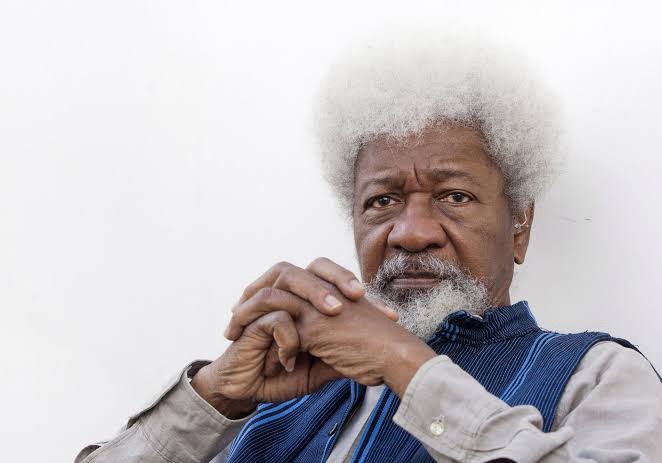
Nobel laureate Prof. Wole Soyinka has dismissed claims that Nigeria’s ongoing security crisis is rooted in religion, arguing instead that the nation’s turmoil stems from violent extremism, corruption, and governance failures.
Soyinka was reacting to remarks by former U.S. President Donald Trump, who recently described Nigeria as a “country of particular concern” over alleged persecution of Christians, warning of possible American intervention.
In a statement released on Monday, Soyinka cautioned against reducing Nigeria’s complex insecurity to a Christian-Muslim conflict. He said such foreign characterizations distort reality and deepen division, while ignoring the political and economic forces that fuel violence across the country.
“Nigeria’s crisis is not about Christians versus Muslims,” Soyinka said. “It is about the manipulation of faith by violent extremists and the exploitation of religion by political opportunists.”
He explained that terrorist groups such as Boko Haram and the Islamic State West Africa Province (ISWAP) have weaponised religion to advance criminal and political agendas, targeting both Christians and Muslims.
Soyinka also criticised the culture of impunity that allows perpetrators of violence to act without consequence, noting that this undermines justice and encourages retaliation.
The literary icon warned that external actors who describe the conflict as genocide against Christians risk inflaming tensions and undermining Nigeria’s sovereignty.
He urged both domestic leaders and international partners to focus on the real drivers of instability such as poor governance, poverty, and corruption rather than religious identity.
Nigeria’s federal government has similarly rejected the U.S. classification, insisting that the country’s violence affects people of all faiths. Religious bodies, including the Nigerian Supreme Council for Islamic Affairs (NSCIA), have echoed Soyinka’s position, describing the conflict as criminal and extremist, not doctrinal.
Soyinka’s remarks have drawn widespread attention, with analysts saying his intervention could help reframe international understanding of Nigeria’s security challenges.
