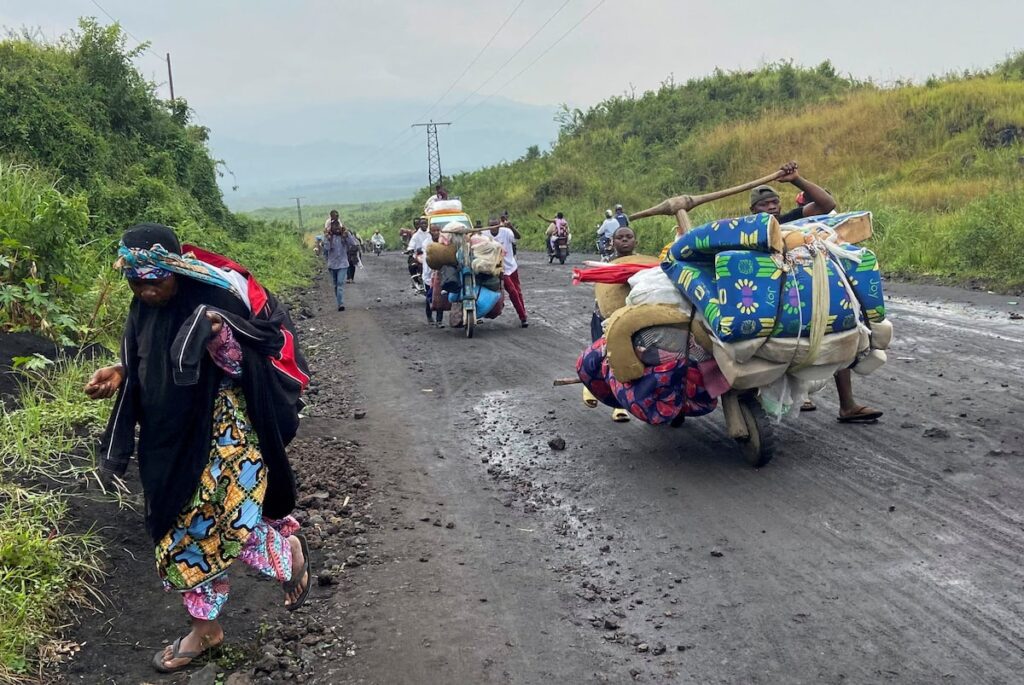
A crucial meeting between the presidents of Rwanda and the Democratic Republic of Congo (DRC) aimed at addressing the ongoing M23 rebel conflict has been called off, both nations confirmed on Sunday. The cancellation dashed hopes of a breakthrough in resolving the nearly three-year conflict, which has displaced more than 1.9 million people in eastern Congo.
The summit, scheduled to take place in Angola, was expected to mark a rare face-to-face meeting between the two central African leaders, with the potential to sign a peace agreement aimed at easing tensions between the neighboring countries. The M23 insurgency has significantly destabilized the eastern DRC, stoking fears of a broader conflict reminiscent of the devastating wars in the Great Lakes region between 1996 and 2003, which claimed millions of lives.
In a statement, Congo’s presidency revealed that the Rwandan delegation refused to attend the meeting, citing a disagreement over the terms of the proposed peace deal. Rwanda made its participation contingent on Congo holding direct talks with the M23 rebels, a demand that was rejected by the DRC government. Rwanda’s foreign ministry later confirmed that the lack of consensus made it impossible for them to sign the agreement at this time. They stated that postponing the meeting would allow Congo more time to engage directly with the M23 group.
The peace plan was set to outline mutual concessions: Rwanda would dismantle its defensive measures in the conflict, while the DRC would commit to eliminating the Democratic Forces for the Liberation of Rwanda (FDLR), a Hutu rebel group accused of committing atrocities against Tutsis in both countries.
The conflict has sparked accusations from Congo, the United Nations, and others that Rwanda has been fueling the M23 rebellion by providing military support, including deploying troops and weapons. Rwanda denies these allegations, admitting only to taking defensive measures against rebel groups, and claims that Congo is recruiting FDLR fighters to bolster its side. U.N. experts have reported that Rwanda has maintained control over M23 operations, with between 3,000 and 4,000 troops reportedly stationed in Congo.
Experts, such as Jason Stearns from Canada’s Simon Fraser University, have warned that the international community needs to apply greater pressure on Rwanda to de-escalate the situation. “There’s very little pressure, especially as the country putting the most pressure on Rwanda so far is the United States, which is going through a transition of its own,” Stearns noted.
The collapse of the talks highlights the ongoing challenges in resolving the M23 conflict and the fragile peace in the region, with no clear resolution in sight.
