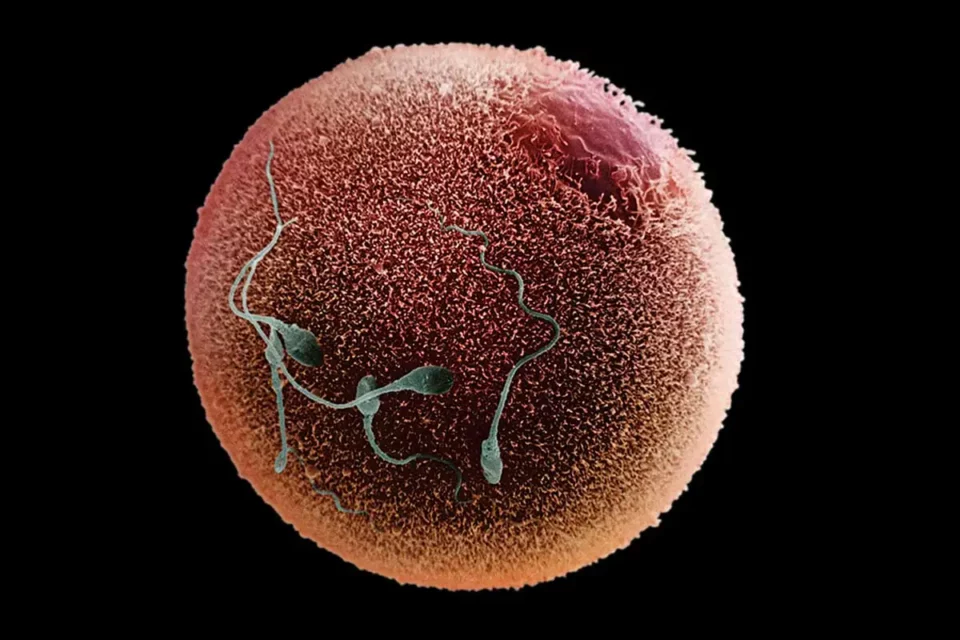
Scientist have created human eggs from skin cells, potentially transforming IVF treatment for couples who have no other options.
The work is at an early stage but if scientists can perfect the process it would provide genetically related eggs for women who are infertile because of older age, illness or medical treatment. The same procedure could be used to make eggs for same-sex male couples.
But outside experts said the proof-of-concept research could eventually change the meaning of infertility, which affects one in six people worldwide.
If successful, the technology called in-vitro gametogenesis would enable older women or women who lack eggs for other purposes to genetically reproduce, Paula Amato, the co-author of a new study announcing the achievement, told AFP.
Senior Author, Shoukhrat Mitalipov, Ph.D. (OHSU), the director of the OHSU Centre for Embryonic Cell and Gene. He also stated “We achieved something that was thought to be impossible,”
The researchers characterized their technique as “mitomeiosis,” alluding to the combination of the two major known processes of cell division in biology.
“It also would allow same-sex couples to have a child genetically related to both partners,” said Amato, a researcher at the Oregon Health & Science University in the United States.
Scientists have been making significant advances in this field in recent years, with Japanese scientists announcing in July that they had created mice with two biological fathers.
But the recent study, published in the journal Nature Communications, marks a major advance by using DNA from humans, rather than mice.
Another concern is that this could enable people to steal a skin cell from another person, such as a celebrity, and make a baby with their DNA without their knowledge or permission.
“We could have Taylor Swift babies all over the world. It’s a theoretical possibility, but not crazy,” says Ronald Green, a Dartmouth College bioethicist. “It’s a technology that’s very encouraging. But it raises a number of daunting ethical questions.”
While all those chances need to be debated, Greely and others argue that the technology is worth pursuing with proper oversight.
“If it was safe, it would offer relief to literally millions of people around the world who desperately want to have kids who are genetically theirs,” says Greely.