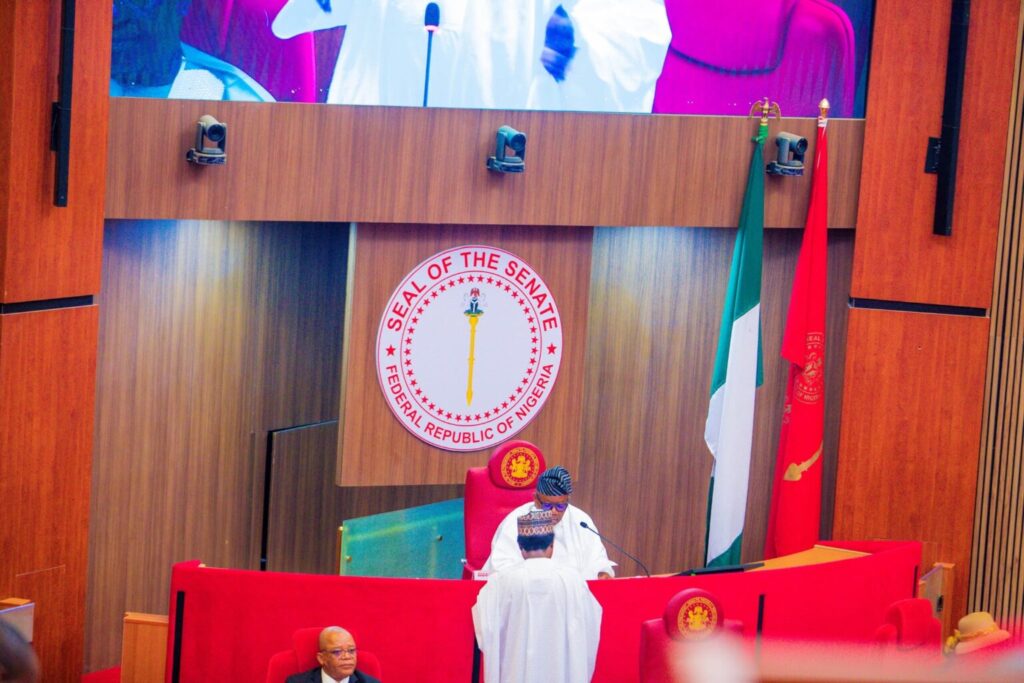
The Nigerian Senate has approved President Bola Tinubu’s request for a ₦1.77 trillion ($2.2 billion) loan, following a voice vote in favor of the proposal. The loan, which is part of a broader external borrowing plan, aims to help cover a portion of the ₦9.7 trillion budget deficit for the 2024 fiscal year.
The approval came after a report was presented by the Senate Committee on Local and Foreign Debts, chaired by Senator Wammako Magatarkada (APC, Sokoto North). The President’s request was submitted to the National Assembly earlier this week, seeking legislative approval for the fresh external borrowing in the 2024 Appropriation Act.
This new loan is expected to increase Nigeria’s foreign debt burden, further straining the government’s finances. According to the Central Bank of Nigeria (CBN), the Federal Government spent $3.58 billion on servicing foreign debt in the first nine months of 2024—a significant 39.77% increase from the $2.56 billion spent during the same period in 2023.
A breakdown of the CBN’s international payment statistics shows that Nigeria’s debt servicing costs have been steadily rising this year. The highest monthly expenditure occurred in May 2024, with $854.37 million paid, reflecting a 286.52% increase from May 2023. Other months, however, saw fluctuations, including a significant rise of 398.89% in January 2024 compared to January 2023.
Experts have expressed concerns about the growing pressure on Nigeria’s foreign debt obligations, particularly in light of rising exchange rates. The approval of this loan will likely contribute to increasing debt servicing costs in the coming months, adding to the challenges of managing Nigeria’s fiscal health.
As the government seeks to balance its budget, questions about the long-term impact of rising debt on the Nigerian economy remain a key topic of debate.
