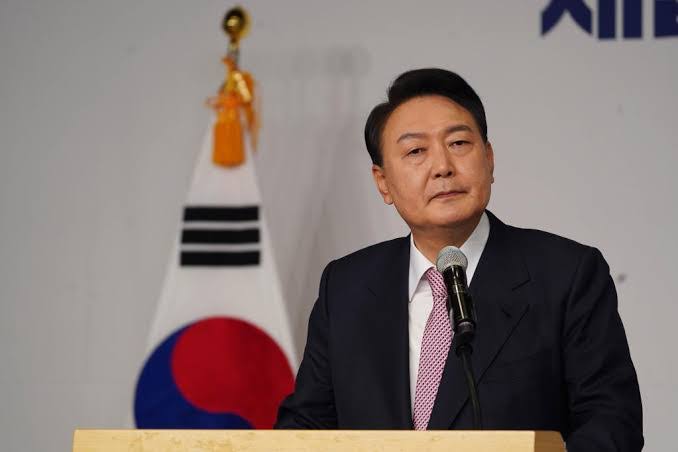
South Korean anti-graft investigators were awaiting a new court-ordered arrest warrant on Tuesday for impeached President Yoon Suk Yeol, whose failed martial law attempt plunged the nation into its worst political crisis in decades.
Yoon, a former star prosecutor, has refused questioning three times over last month’s botched martial law decree. This has intensified efforts by the Corruption Investigation Office (CIO) to secure his detention. The initial seven-day arrest warrant expired, prompting investigators to refile their request with the Seoul Western District Court late Monday.
“The Joint Investigation Headquarters has resubmitted the warrant to extend the arrest of defendant Yoon,” the CIO said in a statement, adding that details regarding the validity period could not be disclosed.
If approved, Yoon would become the first sitting president in South Korea’s history to be arrested. However, as of Tuesday afternoon, there was no confirmation from the court on whether the new warrant had been granted.
CIO deputy director Lee Jae-Seung expressed confidence in the court’s decision, stating earlier that the likelihood of rejection was “very low.” Yoon faces charges of insurrection and, if convicted, could face prison or even the death penalty.
Yoon’s lawyers have challenged the initial warrant, calling it “unlawful” and asserting that the CIO lacks the authority to investigate insurrection, which is outside its jurisdiction. Despite these claims, legal experts believe the reissued warrant is likely to be accepted.
Arrest Attempts Hampered by Resistance
Efforts to arrest Yoon have faced significant challenges. Hundreds of guards stationed at his residence have prevented investigators from detaining him, leading to a tense six-hour standoff on Friday that ended without an arrest. Supporters of the president have also camped outside his residence, braving freezing temperatures to show their backing.
The CIO, a relatively new agency with fewer than 100 staff and limited experience, has yet to prosecute a major case. Experts believe cooperation with the police under the Joint Investigation Headquarters will be critical in executing the arrest.
Political and Legal Fallout
South Korea’s Constitutional Court has set January 14 as the start date for Yoon’s impeachment trial, which will proceed even if he does not attend. The court has up to 180 days to decide whether to remove Yoon from office or reinstate his powers.
The opposition Democratic Party has also filed a legal complaint against acting president Choi Sang-mok for “dereliction of duty” after he declined to intervene in the case.
While Yoon’s appearance at the trial remains uncertain, local media speculate he may attend the opening session. Former presidents Roh Moo-hyun and Park Geun-hye both declined to appear during their impeachment trials in 2004 and 2016–2017, respectively.
As of Tuesday, the streets outside Yoon’s residence were calmer, with protests subsiding as investigators awaited the court’s decision on the new warrant.
