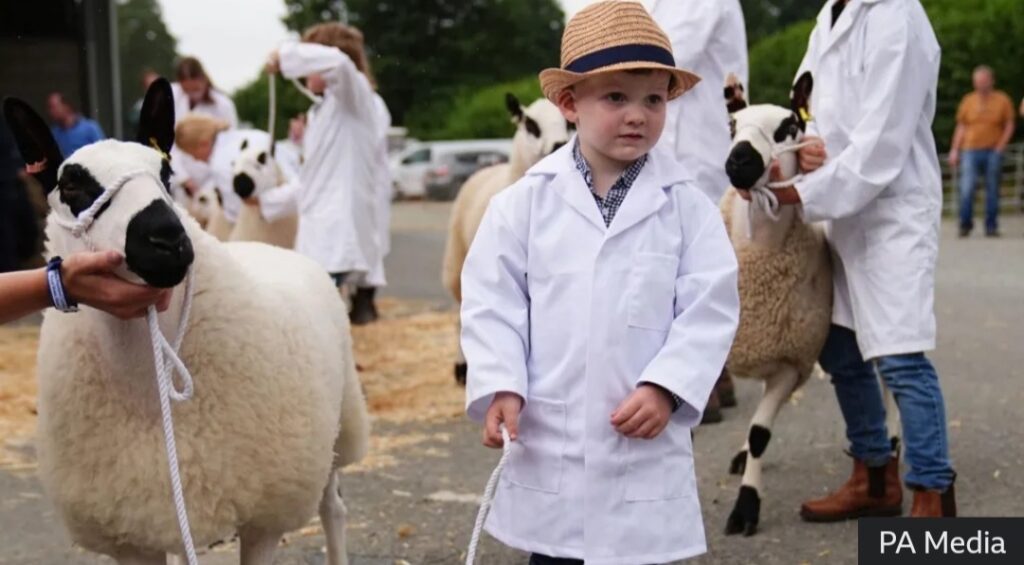
Marks & Spencer CEO Stuart Machin has warned that controversial government plans to reform agricultural inheritance tax risk putting young people off entering the farming industry, potentially endangering the long-term sustainability of British agriculture.
Speaking out amid mounting backlash from farmers and retailers, Machin criticised the proposed changes as a “short-sighted move” that could damage generational continuity in farming. “Increasing taxes on farms may feel like the easy way out,” he said, “but the long-term cost will be borne by our food system, our young farmers, and ultimately, our customers.”
The Tax in Question
At the heart of the row is a plan to end a longstanding inheritance tax exemption for agricultural property starting in April 2026. Under the new rules, farms valued over £1 million would be subject to a 20 percent tax on that value. While this is half the standard rate, it remains significant for landowners who are often asset-rich but cash-poor. The tax would be payable over 10 years, interest-free.
Critics argue that the move will force many farming families to sell land to cover tax bills, jeopardising small, family-run operations that form the backbone of British agriculture.
Industry Unites in Protest
The tax proposal has sparked widespread protests. Thousands of farmers have rallied in London over recent months, with convoys of tractors and symbolic toy tractor displays staged outside Parliament. A coalition of major supermarket chains including Tesco, Sainsbury’s, Asda, Aldi, Lidl, and Waitrose has joined farmers in urging the government to delay implementation and consult more widely.
In a rare show of unity, the food retail sector warned that the tax could destabilise UK food supply chains and erode the already fragile confidence of the next generation of farmers.
Government Defends the Policy
The Treasury insists that the majority of farms, around 75 percent, will be unaffected. It claims the new tax will raise an estimated £500 million annually by 2029 to 2030. Officials argue the reform is necessary to ensure fairness and to generate funds for public services.
However, the National Farmers’ Union and other rural advocacy groups dispute both the projected revenue and the fairness of the measure. They warn it threatens the viability of family farms and rural communities.
A Sector at a Crossroads
As the debate continues, Stuart Machin’s warning adds to growing pressure on the government to reconsider. “This policy could make farming unattractive to younger generations just when we need them most,” he said. “It’s not just about tax. It’s about the future of food and farming in Britain.”
With just months to go before the reforms take effect, farmers, retailers, and industry leaders are calling for an urgent rethink to protect the future of UK agriculture.
