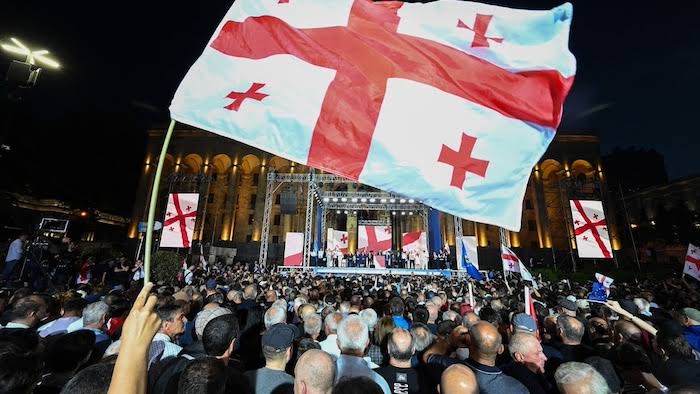
Tensions in Georgia’s capital, Tbilisi, have intensified following the ruling Georgian Dream Party’s decision to halt government negotiations on European Union accession. Protests that erupted over the weekend continued unabated into Monday morning, with demonstrators demanding clarity on the government’s commitment to European integration.
Thousands of citizens gathered outside the Parliament building, waving Georgian and EU flags, and chanting pro-European slogans. Activists accuse the Georgian Dream Party of jeopardizing the country’s European future, despite widespread public support for EU membership.
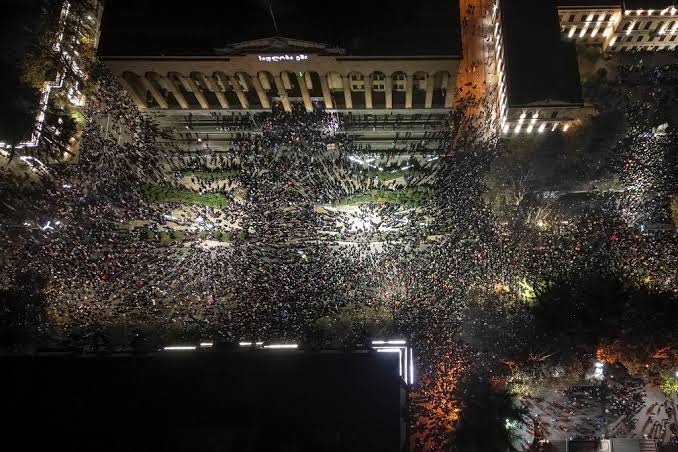
“We will not stand by as our government turns its back on the will of the people,” said Mariam Khutsishvili, a student activist. “The EU is not just about politics—it’s about values, freedoms, and opportunities for all Georgians.”
The protests were sparked by the Georgian Dream Party’s announcement late last week that it would temporarily suspend EU accession talks. Officials cited “unfavorable conditions” and the EU’s “unrealistic demands” as reasons for the pause, though critics argue the move aligns with the party’s increasing tilt toward Russia.
Prime Minister Irakli Garibashvili defended the decision in a televised address, stating, “Our priority remains safeguarding Georgia’s sovereignty and ensuring a balanced foreign policy. EU accession remains an aspiration, but not at the expense of our national interests.”
However, opposition leaders called the explanation disingenuous. “This government is playing a dangerous game, risking decades of progress,” said Levan Japaridze, a leader of the United National Movement.
The European Union, which has yet to issue an official response to the suspension, had previously expressed concerns over Georgia’s democratic backsliding. Analysts warn that further delays in the accession process could push Georgia closer to geopolitical isolation or greater Russian influence.
Meanwhile, protest organizers are planning further demonstrations throughout the week, with some calling for early elections and the resignation of Georgian Dream leaders.
Observers believe the coming days will be critical for Georgia’s future direction. “This is not just a policy dispute—it’s a battle for Georgia’s identity,” said political analyst Nana Kobakhidze. “The choice between Europe and an alternative path has never been starker.”
As the standoff continues, Tbilisi remains a city on edge, with citizens anxiously watching to see whether the government will heed public outcry or deepen the political divide.
