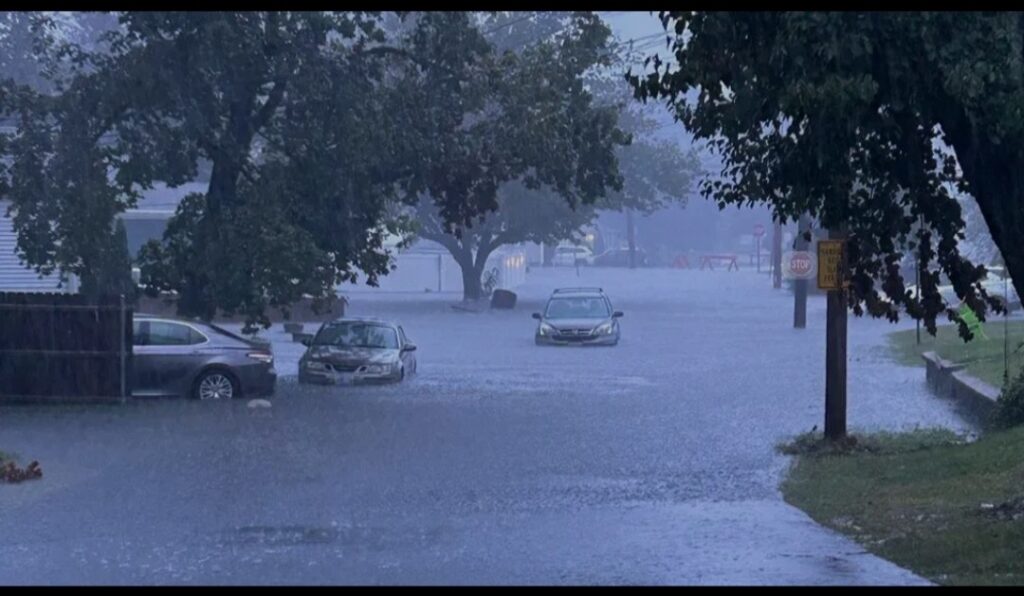
A powerful storm system bringing torrential rainfall and flash flooding has paralyzed transportation and prompted emergency declarations along the U.S. Eastern Seaboard, from Washington D.C. to New York City and beyond.
States of Emergency Declared
New York Governor Kathy Hochul and New Jersey’s Acting Governor Tahesha Way have declared states of emergency as severe thunderstorms dumped as much as 5 to 7 inches of rain across already saturated urban areas. Flash flood warnings remain in effect across multiple states, including Pennsylvania, New Jersey, Delaware, and parts of Connecticut and New York.
“This is a life-threatening weather event,” said Governor Hochul in a press briefing. “New Yorkers should avoid all non-essential travel and stay informed through official channels.”
Flash Flooding and Travel Chaos
The National Weather Service issued a series of flash flood watches and severe thunderstorm warnings across the I‑95 corridor, impacting millions of residents in densely populated metro areas. Rainfall rates exceeding 3 inches per hour caused roads to flood within minutes.
In New York City, the Clearview Expressway in Queens became completely submerged, stranding vehicles and prompting water rescues. Amtrak suspended service between Philadelphia and Wilmington after tracks were inundated. In the skies, more than 1,170 flights were canceled across major airports including JFK, LaGuardia, Newark Liberty, and Boston Logan.
“We’re seeing water levels rise rapidly, particularly in low-lying and urban areas,” said a National Weather Service spokesperson. “This is a dangerous situation.”
Impacted Areas
Washington D.C. to New York City: Severe thunderstorms, street flooding, and power outages reported
Philadelphia and Wilmington: Rail service halted; flash floods in multiple neighborhoods
New Jersey: Widespread road closures, school shutdowns, and emergency shelters opened
Hudson Valley and Long Island: Storm drains overwhelmed; residents urged to relocate from basement apartments
Transportation Disruptions
Sector Status
Air Travel Over 1,170 flight cancellations across major hubs
Rail Travel Amtrak suspended between Philly and Wilmington
Roadways Highways flooded; emergency rescues underway
Transit NYC subways and regional bus routes delayed
Safety Guidelines
Authorities are urging residents to:
Avoid non-essential travel
Move to higher ground, especially those in basement apartments
Monitor emergency alerts and local news
Check on vulnerable neighbors
“This is not over,” said New York City Emergency Management. “More heavy rain is expected through Friday afternoon, and the risk of flooding remains high.”
Why This Happened
Meteorologists attribute the flooding to a slow-moving frontal system combined with tropical moisture, which created ideal conditions for persistent, high-intensity rainfall across the Mid-Atlantic and Northeast.
“This storm has characteristics similar to past flash flood disasters,” said AccuWeather Senior Meteorologist Alex DaSilva. “The system is stalled, and the rainfall is not letting up.”
What’s Next
The storm is expected to linger into Friday, bringing continued threats of flash flooding, power outages, and transit disruptions. Commuters and residents are advised to stay off the roads and closely follow updates from local emergency management agencies.