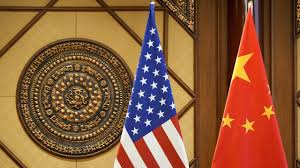
US President Donald Trump announced Thursday that he will impose an additional 10% tariff on Chinese imports while proceeding with tariffs on Canada and Mexico next week, citing “unacceptable” drug smuggling.
Earlier this month, Trump had threatened sweeping 25% levies on Canadian and Mexican imports over illegal immigration and fentanyl trafficking but temporarily paused them. With that pause set to expire on Tuesday, the tariffs are now scheduled to take effect.
Responding to reporters’ questions about whether he would proceed with the tariffs, Trump wrote on social media that until the fentanyl crisis is “seriously limited or stopped,” the proposed levies will move forward.
“China will likewise be charged an additional 10% tariff on that date,” Trump added, referring to March 4.
Tensions Rise Over Tariffs and Fentanyl
Trump had already imposed a 10% tariff hike on Chinese imports earlier this month, prompting retaliation from Beijing. A US official confirmed to AFP that the new levy adds to the existing one, citing “insufficient progress” in addressing fentanyl smuggling.
The official also emphasized that Washington needed to take action against all three countries to combat the fentanyl crisis effectively.
Chinese Commerce Minister Wang Wentao expressed strong opposition to Washington’s trade measures, stating that China has implemented countermeasures to protect its legitimate interests. In a letter to newly confirmed US Trade Representative Jamieson Greer, Wang urged dialogue instead of escalating tariffs.
Meanwhile, Mexican President Claudia Sheinbaum said she hopes to speak with Trump to negotiate a resolution and avoid the threatened tariffs. A high-level Mexican delegation is currently in Washington seeking a deal.
Canadian Prime Minister Justin Trudeau, on the other hand, said officials are working “around the clock” to prevent US levies but warned of an “immediate” response if the tariffs go into effect. Trudeau has repeatedly argued that less than 1% of fentanyl and undocumented migrants entering the US come from Canada.
The head of a Canadian business council warned that Trump’s aggressive stance on Canadian imports has fundamentally shifted trade relations between the two nations.
Trump’s Broader Trade Agenda
In addition to the fentanyl-related tariffs, Trump reiterated on Truth Social that his “reciprocal tariffs” plan, set to take effect on April 2, remains unchanged. These tariffs will vary by trading partner, with details to be released after US agencies complete ongoing trade investigations.
Commerce Secretary Howard Lutnick reinforced this stance, stating in a Fox News interview that the US will adopt a “how you treat us is how you get treated” approach to trade.
China has pushed back against US claims linking fentanyl to its exports, arguing that Washington must address the crisis domestically instead of targeting foreign nations with tariffs. A Congressional Research Service report last year indicated that while China supplies chemical precursors for fentanyl, most US-bound production occurs in Mexico.
Beijing has warned that additional tariffs could harm ongoing counternarcotic cooperation, with China’s foreign ministry cautioning in early February that such measures may undermine diplomatic efforts on the issue.