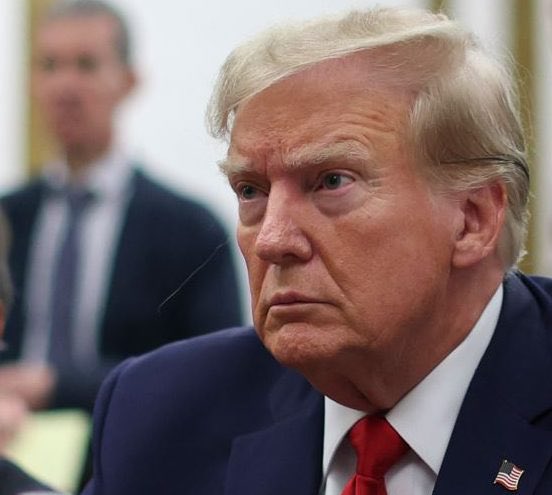
President-elect Donald Trump announced Monday that he intends to declare a national emergency on border security and use military resources to carry out a large-scale deportation of undocumented immigrants. The move aligns with promises made during his campaign to tackle immigration and stabilize the US-Mexico border.
On his social media platform, Truth Social, Trump reposted a message from a conservative activist claiming he was “prepared to declare a national emergency and will use military assets to reverse the Biden invasion through a mass deportation program.” Trump endorsed the statement with a single word: “True”
Immigration was a cornerstone of Trump’s campaign, which culminated in his November 5 victory over Democratic Vice President Kamala Harris. Trump’s rhetoric frequently characterized undocumented immigrants as threats to American safety and culture, alleging an “invasion” that he claimed had been exacerbated by President Joe Biden’s policies.
Since his election, Trump has been assembling a cabinet of immigration hardliners. Among his high-profile appointments is former acting Immigration and Customs Enforcement (ICE) chief Tom Homan, named as the administration’s “border czar.”
Homan, speaking at the Republican National Convention in July, warned undocumented immigrants: “You better start packing now.” His stance underscores the administration’s intent to pursue aggressive immigration policies, which Trump vowed to enforce by invoking the Alien Enemies Act of 1798—a controversial and rarely used law that critics argue is outdated and unconstitutional.
Authorities estimate that 11 million undocumented immigrants currently reside in the United States. Trump’s proposed deportation plan could directly affect an estimated 20 million families, many of whom include US citizens.
Critics and human rights advocates have raised alarms about the potential for widespread family separations, economic disruptions, and violations of civil liberties. Legal scholars have also questioned the use of the Alien Enemies Act, citing its association with past abuses, including the internment of Japanese-Americans during World War II.
Trump’s claims of a migrant “invasion” have been met with skepticism. While illegal crossings at the US-Mexico border reached a record high of 250,000 in December 2023, recent figures suggest that border encounters have since returned to levels similar to those seen in 2020, during the final year of Trump’s first term.
Despite this, Trump has continued to frame immigration as a national crisis. His incendiary language, including claims that undocumented immigrants “poison the blood” of the nation, has drawn widespread condemnation from civil rights groups and Democrats.
Trump has yet to provide specific details about how his immigration crackdown will be implemented. Analysts predict significant legal challenges to any effort to use military resources for mass deportations or to apply the Alien Enemies Act in this context.
As Trump prepares to return to the White House, his approach to immigration signals a contentious start to his second term, reigniting debates about America’s identity, borders, and the balance between security and humanity.
