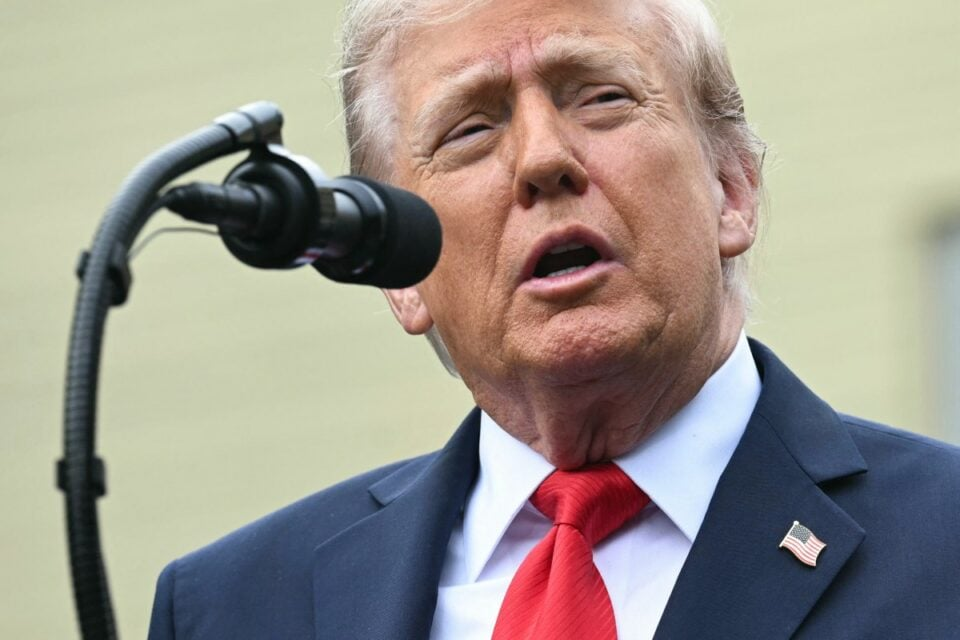
President Donald Trump said Monday he would impose a 100 percent tariff on all films produced overseas and imported into the United States, a sweeping proposal that could upend Hollywood’s reliance on international productions and global box office revenue, according to Reuters.
The move extends Trump’s protectionist trade policies into the cultural sector, injecting uncertainty into an industry that has long depended on foreign partnerships and overseas markets.
“Our movie-making business has been stolen from the United States of America by other countries, just like stealing candy from a baby,” Trump declared on his Truth Social account.
It remains unclear what legal authority the president would invoke to enforce such a tariff. The White House did not respond to requests for clarification, while major U.S. studios — including Warner Bros Discovery, Paramount, Skydance, and Netflix — declined immediate comment. Comcast also refused to comment.
Analysts warned that the measure could sharply raise production costs and ultimately be passed on to consumers. “There is too much uncertainty, and this latest move raises more questions than answers,” Paolo Pescatore of PP Foresight told Reuters.
Trump first floated the idea in May without details, leaving industry executives unsure whether he intended to target specific countries or all film imports. In response, a coalition of U.S. film unions and guilds urged the administration to back domestic tax incentives instead of tariffs to strengthen local production.
The U.S. film industry recorded a $15.3 billion trade surplus in 2023, driven by $22.6 billion in exports, according to the Motion Picture Association. Industry leaders warn that tariffs of this scale could disrupt that balance, undermining a key pillar of America’s cultural exports.
Hollywood has long relied on production hubs in Canada, the United Kingdom, and Australia, where tax incentives make high-budget filming more cost-effective. Co-productions with European and Asian partners have also provided financing and market access critical to blockbuster filmmaking.
Executives told Reuters they fear that a sweeping tariff could ripple across the entire production chain, threatening the livelihoods of thousands of U.S. workers involved in overseas shoots — from visual effects teams to location crews — whose work typically spans multiple countries.
