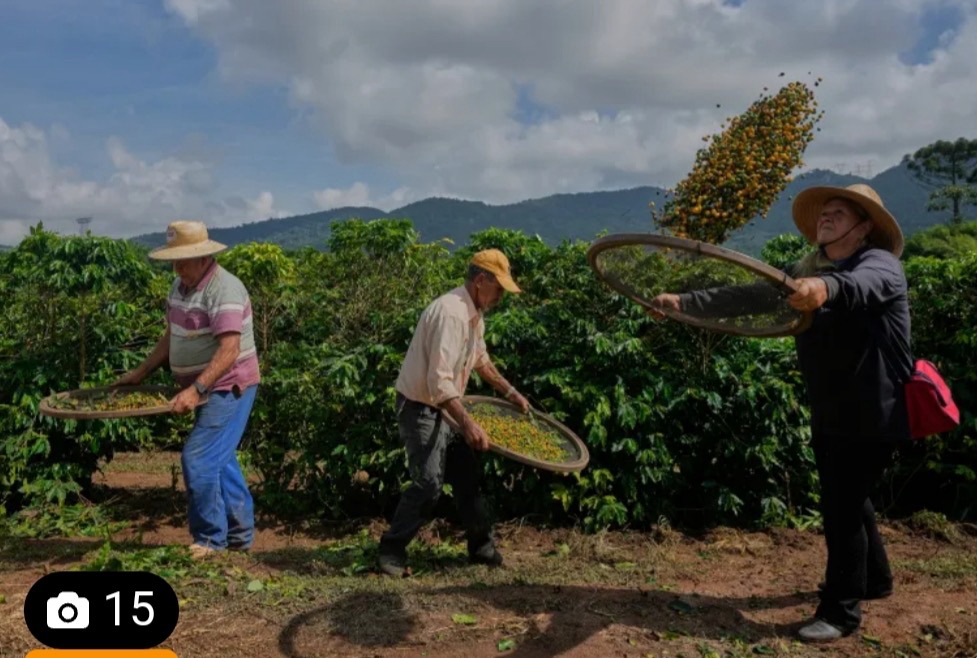
A new 50 percent tariff on Brazilian imports announced by U.S. President Donald Trump is sending shockwaves through Brazil’s coffee heartland, threatening the livelihoods of thousands of small-scale farmers and disrupting global coffee trade just days before its August 1 implementation.
The tariff, framed by Trump as a response to the prosecution of his political ally, former Brazilian president Jair Bolsonaro, directly targets Brazil’s most iconic exports: coffee and orange juice. The United States is Brazil’s largest market for coffee, importing nearly 16 percent of the country’s production.
But behind the numbers lies a deeper human toll.
“We can’t survive this,” says José Natal da Silva, a farmer in Porciúncula who relies on the fragile economics of family-scale arabica coffee production. “Prices are falling, costs are rising, and now this tariff may be the final blow.”
Brazil is the world’s largest coffee exporter, and two-thirds of its beans come from small-scale family farms. Already strained by climate-related droughts, equipment price hikes, and volatile global markets, producers are now bracing for financial disaster. Arabica coffee prices have dropped more than 30 percent since February, with little sign of recovery.
Brazil Pushes Back
In Brasília, the Brazilian government has made multiple diplomatic overtures to the Trump campaign since May, including ten formal requests and a written appeal to delay or reverse the tariff. All have gone unanswered except for a social media post from Trump reaffirming his decision.
With negotiations stalled, Brazil’s Finance Ministry is preparing a domestic support package expected to aid around 10,000 affected businesses. The country is also exploring alternate export markets, though few can replace the United States in volume or price.
Still, broader economic impact may be limited. The United States accounts for about 12 percent of Brazil’s total exports, meaning the shock will likely be sector-specific, hitting agricultural regions the hardest.
U.S. Importers React
On the American side, importers are racing to land Brazilian coffee shipments before the tariff deadline. Containers are being rerouted mid-journey, and traders are adjusting prices to reflect the anticipated spike in costs.
“Once the tariff hits, we’ll have to look elsewhere,” said a coffee trader based in New York. “Colombia, Vietnam, Peru they’ll fill in, but it won’t be easy or cheap.”
Coffee and orange juice prices have already begun to rise. U.S. futures surged as traders anticipated higher costs and tighter supply. Coffee prices jumped over 6 percent in a single week, while orange juice futures climbed more than 10 percent.
A Brewing Global Shift
Economists warn that if the tariff remains in place, global supply chains could permanently realign, weakening Brazil’s agricultural export dominance and raising prices for consumers worldwide.
Meanwhile, small farmers like Paulo Menezes Freitas in Varre-Sai are weighing painful decisions.
“If prices fall any further, I may have to walk away from coffee farming altogether,” he said. “This isn’t politics to us it’s our survival.”
