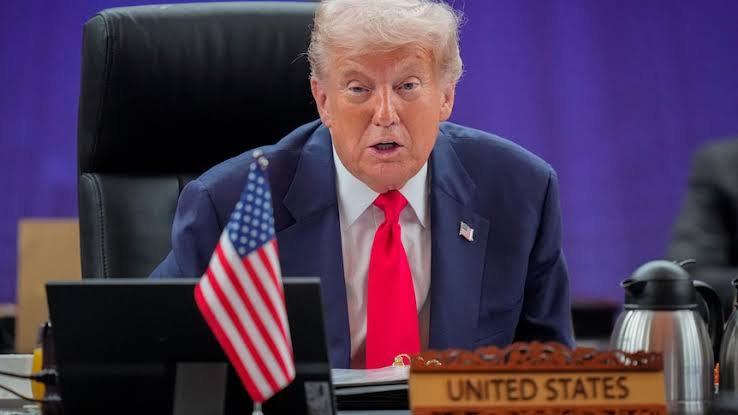
In the sweltering heat of Nigeria’s northern frontiers—where dusty trails wind through bandit-ridden forests and herder-farmer tensions simmer like a pot left too long on the fire—a distant voice from across the Atlantic has suddenly amplified the urgency. On November 2, 2025, U.S. President Donald Trump issued a stark warning to Nigeria: address the “mass slaughter” of Christians by Islamist insurgents and bandits, or face severed aid and possible American military action.
The rhetoric, laced with claims of “genocide,” echoed Trump’s first-term playbook on religious persecution, but this time it landed like a thunderclap in Abuja. Within days, Nigerian troops launched a flurry of raids and airstrikes, neutralizing dozens of bandits and terrorists across multiple states.
Coincidence? Catalyst? Or a long-overdue internal reckoning?
As the dust settles, questions swirl:
Was Trump’s threat the spark that ignited Nigeria’s security apparatus?
Did the government need an external shove to act?
And amid the chaos, are Christians being deliberately targeted—or is the violence rooted in deeper, resource-driven conflicts?
The Spark: Trump’s Threat and Its Echoes
Trump’s intervention didn’t emerge from a vacuum. Nigeria has grappled for years with a hydra-headed security crisis—Boko Haram and ISWAP in the northeast, Fulani herder militias clashing with farmers in the Middle Belt, and heavily armed “bandits” terrorizing the northwest through kidnappings, cattle rustling, and village raids.
Human rights groups report over 10,000 deaths from banditry in just two years.
Trump’s remarks zeroed in on the religious dimension, framing the violence as a targeted assault on Nigeria’s Christian minority—estimated at roughly 50% of the population.
“I’ve ordered the Pentagon to prepare options,” Trump declared, accusing the Nigerian government of complicity and threatening to halt $1.5 billion in annual aid while hinting at possible “boots on the ground.”
The backlash was immediate.
President Bola Tinubu’s administration dismissed the claims as “misinformed,” noting that Muslim communities in states like Zamfara and Katsina suffer the worst of bandit violence.
Protests erupted in Kano, where thousands decried “imperialist threats.” Cleric Sheikh Ahmad Gumi even suggested cutting ties with Washington if rhetoric escalated.
Yet, on platforms like X, many Christians applauded the warning:
“Trump’s threat is the best thing that happened to Nigeria… Troops raided bandits’ hideouts and killed suspects.”
U.S. Democrats blasted Trump’s comments as reckless, and Nigerian bonds dipped by 2% amid investor nerves. But the timing was undeniable:
Within 72 hours, military operations intensified.
A Surge in Action: From Words to Weapons
If threats are measured by reactions, Trump’s words triggered a visible escalation.
Between November 9 and 10, the Nigerian Air Force (NAF) launched precision airstrikes under Operations Hadin Kai and Fansân Yamma, hitting ISWAP enclaves in Borno and bandit camps in Kwara, Katsina, Zamfara, and Kaduna.
Ground troops stormed hideouts in Benue’s Ukum LGA, killing suspects linked to the feared gang leader “Full Fire.”
Since November 3, at least:
• 50 terrorists and bandits killed
• 20 suspects arrested
• Multiple camps destroyed
The Christian Association of Nigeria (CAN) in Kaduna noted a “renewed tempo,” and local clergy reported fewer burials in recent weeks.
Security analysts attribute the surge to several factors:
• Heightened intelligence sharing after Trump’s threat
• Domestic pressure from religious groups and governors
• Tinubu’s insistence on “smarter airpower”
Still, the question lingers: Is this genuine commitment or a short-term show of strength?
Catalyst or Coincidence? The Perils of Waiting for a Foreign Prod
Nigeria’s security breakdown long predates Trump.
Banditry has displaced 3 million people since 2019.
Advocacy groups say 7,087 Christians died between January and August 2025 alone.
With repeated UN warnings, EU sanctions threats, and pleas from governors like Plateau’s Caleb Mutfwang, critics ask:
Did Nigeria really have to wait for a foreign threat to act?
Public frustration is palpable on X:
“It took Trump’s threat to wake our leaders up… Security officials know sponsors but look away.”
But relying on foreign ultimatums has consequences—it exposes sovereignty gaps and fuels neocolonial narratives.
As one protester asked:
“Why protest Trump’s strike on terrorists? Suspicious… Sponsored by politicians?”
True progress demands internal resolve:
• Enforcing grazing regulations
• Clearing forest hideouts
• Prosecuting financiers and political enablers
Not just reactive raids under foreign pressure.
The Shadow of Intent: Are Christians Being Hunted?
Central to Trump’s ultimatum is the debate over intent:
Are Christians being deliberately targeted?
Advocacy groups say yes—documenting attacks where churches are burned, congregants slaughtered, and survivors report assailants asking their religion before killing.
But Nigerian authorities and international observers argue it’s more complex:
• Land scarcity
• Climate pressures
• Ethnic rivalries
• Banditry hitting Muslim-majority northwest hardest
Amnesty International data shows over 10,000 deaths in 2025—many of them Muslim.
The truth likely lies in the middle:
resource-driven violence with increasing religious overtones.
Patterns suggest targeted attacks on Christian communities in the Middle Belt, especially during harvest seasons or holidays.
But reducing the conflict to “genocide” alone risks oversimplification and alienates Muslim victims.
A Fragile Dawn: Beyond the Bombs
Trump’s warning undeniably jolted Nigeria’s security machinery, delivering rapid results where years of internal appeals struggled. Recaptured villages and dismantled camps offer momentary relief.
But sustainability is the real test.
Airstrikes alone cannot restore peace. Nigeria must transition from reactive operations to systemic reforms:
• Forest clearance and territorial control
• Disarming militias
• Punishing political and financial sponsors
• Addressing land and climate pressures
As one X user put it:
“Support U.S. bombing bandits… But punish Nigerian sponsors.”
Ultimately, Nigeria didn’t need to wait for an external ultimatum—but it did.
This episode exposes a troubling pattern: a state more reactive than resolute.
On the question of Christian killings, the debate continues.
But regardless of semantics, the body count demands urgent action.
For now, in the former lairs of bandits, a fragile quiet hangs over the land—thanks, ironically, to a threat issued from 6,000 miles away.